
People talk endlessly about the fears of aging: wrinkles, health concerns, retirement planning, loss, loneliness. What people discuss far less often is the freedom that can quietly emerge later in life. Not the fantasy version of freedom shown in advertisements. The real kind. The emotional kind.
For many people, turning 65 begins shifting something internally. Not overnight, not perfectly, but gradually. The pressure to constantly prove yourself starts loosening, and that changes more than most people expect.
What Kind of Freedom Actually Arrives After 65?
The freedom most people don’t talk about after 65 is emotional: less performing for others, less proving yourself, and more living according to what feels true. It shows up gradually, in the small decisions of daily life rather than one dramatic turning point.
You Stop Living Entirely for Other People
Earlier decades of life are often consumed by responsibility: building careers, raising families, paying bills, meeting expectations, trying to succeed, trying to belong. Many people spend years living according to what is needed rather than what feels emotionally true.
Then later life arrives and something surprising happens. People begin noticing how exhausting constant performance really was. Many older adults start asking themselves questions they ignored for years: Do I actually enjoy this relationship? Why am I still apologizing for my needs? What do I genuinely want now? Those questions can feel uncomfortable, but they can also become deeply freeing.
Does Aging Bring Emotional Honesty?
One of the hidden gifts of aging is clarity. By 65, many people begin seeing patterns they could not fully recognize earlier in life: where they abandoned themselves to keep others comfortable, how much energy went into maintaining appearances, how often they confused approval with love.
That awareness changes priorities. Suddenly peace becomes more important than impressing people, and authenticity becomes more valuable than image. Many people discover they no longer want to spend emotional energy pretending, and that shift can feel incredibly liberating.
Why Do Older Adults Care Less About Judgment?
There is a certain exhaustion that comes from constantly worrying about how you are perceived, and many people carry that burden for decades. But later in life, something often softens. People become less interested in performing perfection and more interested in living honestly: they wear what feels comfortable, speak more directly, protect their peace more carefully, spend time differently, say no more often, care less about approval.
This does not mean becoming cold or selfish. It means becoming more authentic, and authenticity creates a kind of peace many people spend years searching for.
Is Slowing Down a Failure?
Modern culture glorifies busyness. People are taught to measure value through productivity, achievement, and constant motion, and slowing down is often treated as weakness. But many people discover after 65 that slowing down can actually deepen life: you begin noticing things more fully, conversations feel richer, moments feel more meaningful, relationships become more intentional. Life stops feeling like something to survive and starts feeling like something to experience. That shift is profound.
What Does Freedom Look Like Later in Life?
Freedom after 65 is not always dramatic. Sometimes it looks like:
- finally resting without guilt
- ending emotionally draining relationships
- choosing peace over conflict
- spending more time in nature
- reconnecting with forgotten passions
- saying what you truly feel
- realizing you no longer need to impress everyone
These moments may seem small externally. Emotionally, they can feel enormous.
Can You Age Without Losing Yourself?
There is sadness in aging, certainly: bodies change, loss becomes more familiar, time feels more visible. But there can also be wisdom, emotional grounding, and a quieter kind of joy that younger versions of ourselves often struggle to access.
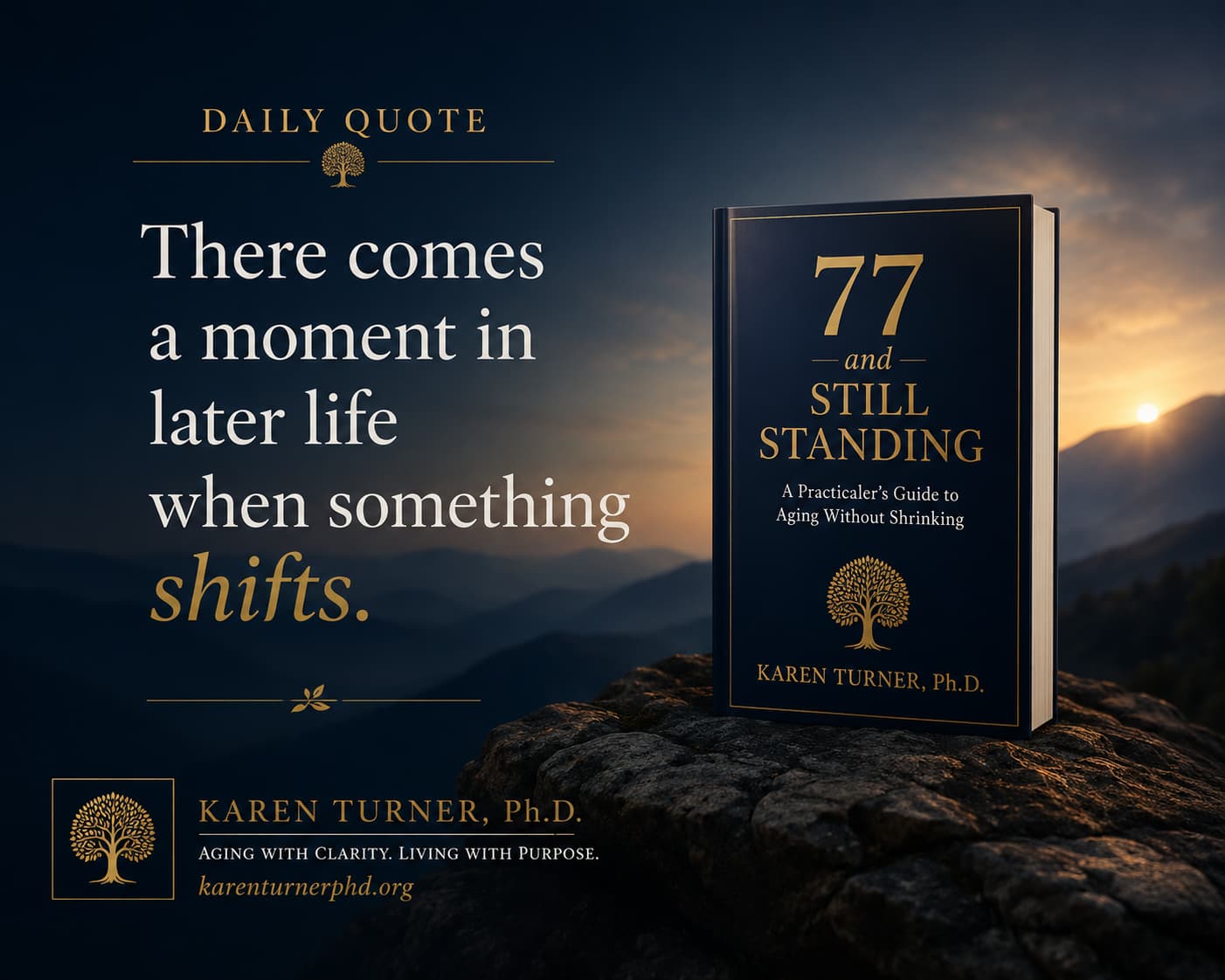
Many people discover that later life is not about becoming less of yourself. It is about becoming more honest about who you already are. That emotional journey is explored beautifully in 77 and Still Standing: A Psychologist’s Guide to Aging Without Shrinking by Dr. Karen Turner. You can learn more here: 77 and Still Standing: Official Book Page.
FAQ
What changes emotionally after 65?
Many people experience increased emotional clarity, authenticity, confidence, and reduced concern about social approval.
Is life after 65 still fulfilling?
Yes. Many people find later life emotionally meaningful, peaceful, and deeply fulfilling in new ways.
Why do older adults care less about judgment?
Life experience often shifts priorities away from external validation and toward emotional peace and authenticity.