

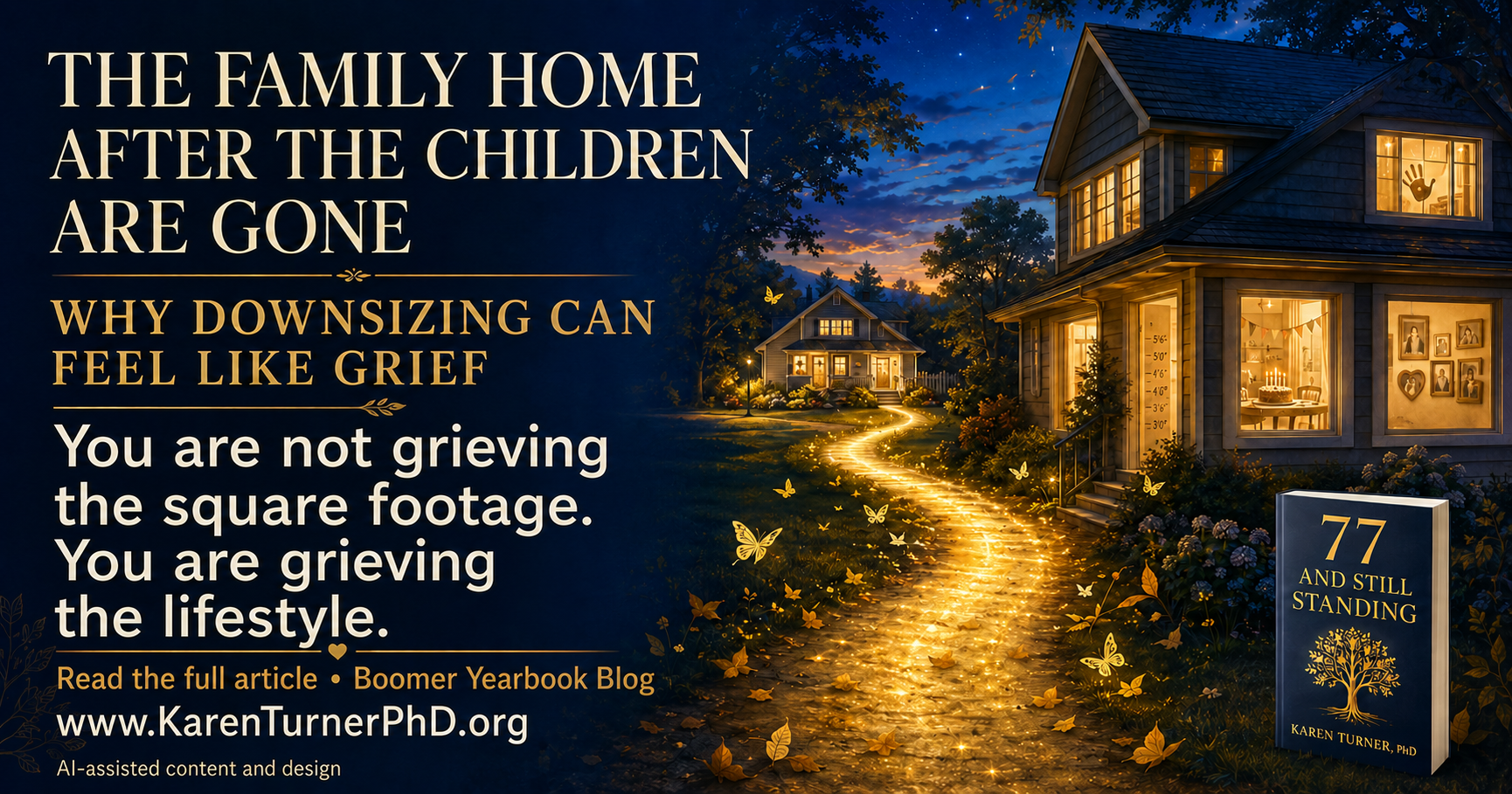
Why Downsizing Can Feel Like Grief
By Karen Turner, PhD · Published 2026-08-28 · Last updated 2026-08-28
Leaving a house can mean saying goodbye to a version of your family and a version of yourself. The children may have been gone for years, yet their rooms still hold the shape of them. A trophy sits on a shelf. Height marks remain inside a closet door. The table remembers birthdays, arguments, homework, holidays, and ordinary dinners that no one knew would someday feel precious.
Then someone says, “This house is too much for you. You should downsize.” They may be right about stairs, repairs, expenses, or unused rooms. But downsizing can sound brutally inadequate. It reduces a profound life transition to square footage.
Why does downsizing feel like grief? A family home holds identity, family roles, memories, routines, and evidence of a life stage that has ended. The process becomes easier when you name the loss, decide from present needs rather than pressure, sort gradually, preserve selected stories and objects, and create continuity between the old home and the next one.
A home is more than the building
A family home becomes a container for identity. It tells you who you have been: spouse, parent, host, neighbor, gardener, provider, caretaker, problem-solver. Its rooms organize memory. A kitchen recalls a child on the counter. A driveway recalls teaching someone to ride a bicycle. Even the frustrating parts belong to a life that mattered.
When people say, “It is only a house,” they may be trying to help. But the house is not the relationship, family, or past. It is the place where those things became visible. Selling it can feel as if the evidence is being erased.
The empty nest can contain delayed grief
When children first leave, parents often stay busy with work, tuition, weddings, grandchildren, caregiving, or illness. The meaning of the empty house may not arrive all at once. Downsizing can bring it forward years later. Packing bedrooms makes departure newly real. Sorting a spouse’s belongings can reopen bereavement. Leaving a neighborhood can mean losing routines and people who know your history without explanation.
Grief does not prove the decision is wrong. It proves something meaningful is changing.
Possessions become a family biography
The hardest part is often not furniture but deciding what it means. A serving dish may recall your mother. School projects may represent years when your children needed you. A spouse’s jacket may carry the outline of a shared life. Releasing an object can feel like releasing the person or memory attached to it.
When adult children say they do not want china, furniture, books, or collections, parents may hear rejection. Often they are declining the object, not the memory. Homes are smaller and lifestyles differ. Ask what stories matter. A grandchild may want one handwritten recipe rather than an entire dining set. Legacy does not require transferring every object. Sometimes it means transferring the story.
You do not have a moral obligation to downsize
A smaller, safer home may reduce maintenance, cost, isolation, and strain. Moving closer to transportation, friends, family, or services can expand daily life. Staying can also be reasonable when the home is affordable, manageable, safe or adaptable, and connected to a supportive community.
There is no virtue in leaving a home you love merely because others think you have too much space. There is also no failure in leaving before a crisis forces the decision. The goal is to choose the setting that supports the life you want now. Our home-or-move decision guide can help you weigh safety, cost, and connection.
Are you staying by choice, or because leaving hurts?
Ask whether you would still choose the house if memories could come with you. Does it support your present life, or mainly preserve the past? Can you manage stairs, bathrooms, yard, repairs, and emergencies? Is the cost preventing other things that matter? What might you gain by moving, not only what might you lose?
A more humane way to downsize
- Name the transition accurately. Say, “I am leaving a chapter,” not, “I am being ridiculous about a house.”
- Start where emotion is low. Begin with expired products, duplicates, old paperwork, or a utility closet.
- Choose what you take forward. Ask what represents the life you want to carry, not only what must go.
- Set a limit. Sort one drawer, shelf, or category before fatigue turns decisions into crisis.
- Preserve stories without preserving everything. Photograph objects, scan letters, or keep one meaningful item from a collection.
- Offer without guilt. Give family a deadline and permission to decline.
- Create a goodbye ritual. Photograph rooms, share a final meal, tell stories, and thank the home for what it held.
- Design continuity in the new home. Bring familiar lamps, artwork, music, scents, and one beloved corner.
What adult children can do
Adult children often see risks and labor before a parent feels ready. Concern may be loving, but urgency can become pressure. Ask what the home represents before arguing logistics. Discuss specific concerns, offer practical help without taking control, be honest about belongings, and help imagine a desirable next life, not merely a smaller space.
The parent is not an obstacle in a moving project. The parent is the person whose life is changing. When a decision cannot wait because of falls, missed bills, serious isolation, or rapidly changing health, preserve choice about location, furnishings, timing, helpers, and what comes along. A person can need help and still deserve authority over its shape.
A new home is not a betrayal of the old one
The home did its work. It sheltered a life. Selling it cannot undo what happened there. Memories are not stored only in the attic, and identity is not contained by an address. You may grieve the house and still choose the move. You may stay after examining alternatives. You may create a next home that reflects who you are becoming without rejecting who you have been.
Downsizing is not always about having less. Done thoughtfully, it can be about deciding what deserves to come with you. For support rebuilding agency through change, read Why Older Adults Sometimes Lose Confidence and How to Reclaim It.
Frequently Asked Questions
Why does downsizing feel like grief?
The family home may hold identity, memories, relationships, routines, and evidence of a life stage that has ended. Leaving it can create grief even when the move is practical and voluntary.
Does feeling sad mean downsizing is the wrong decision?
No. Sadness can reflect the significance of the transition rather than the quality of the decision. Evaluate safety, cost, connection, maintenance, and future needs alongside emotion.
How do I let go of sentimental belongings?
Work gradually. Keep representative objects, photograph meaningful items, record their stories, and decide what belongs in your present life.
What if my children do not want family possessions?
Their decision may reflect space, taste, or lifestyle rather than rejection of the family. Ask which stories, photographs, or selected objects matter to them, and give without guilt.
Is aging in place always better than downsizing?
No. The best choice depends on safety, affordability, maintenance, accessibility, transportation, social connection, and personal preference.
How can adult children discuss downsizing respectfully?
Use specific concerns, ask what the home represents, offer help without taking over, and preserve as much choice as possible.
Related reading
- Should I Stay in My Home or Move? A Decision Guide for Older Adults
- Why Older Adults Sometimes Lose Confidence and How to Reclaim It
- Is It Time to Stop Driving? How to Make the Decision
Sources and further reading
- National Institute on Aging: Aging in Place
- National Institute on Aging: Services for Older Adults Living at Home
- AARP: Coping With Downsizing
This article provides general educational information and is not a substitute for individualized medical, legal, financial, or housing advice.