

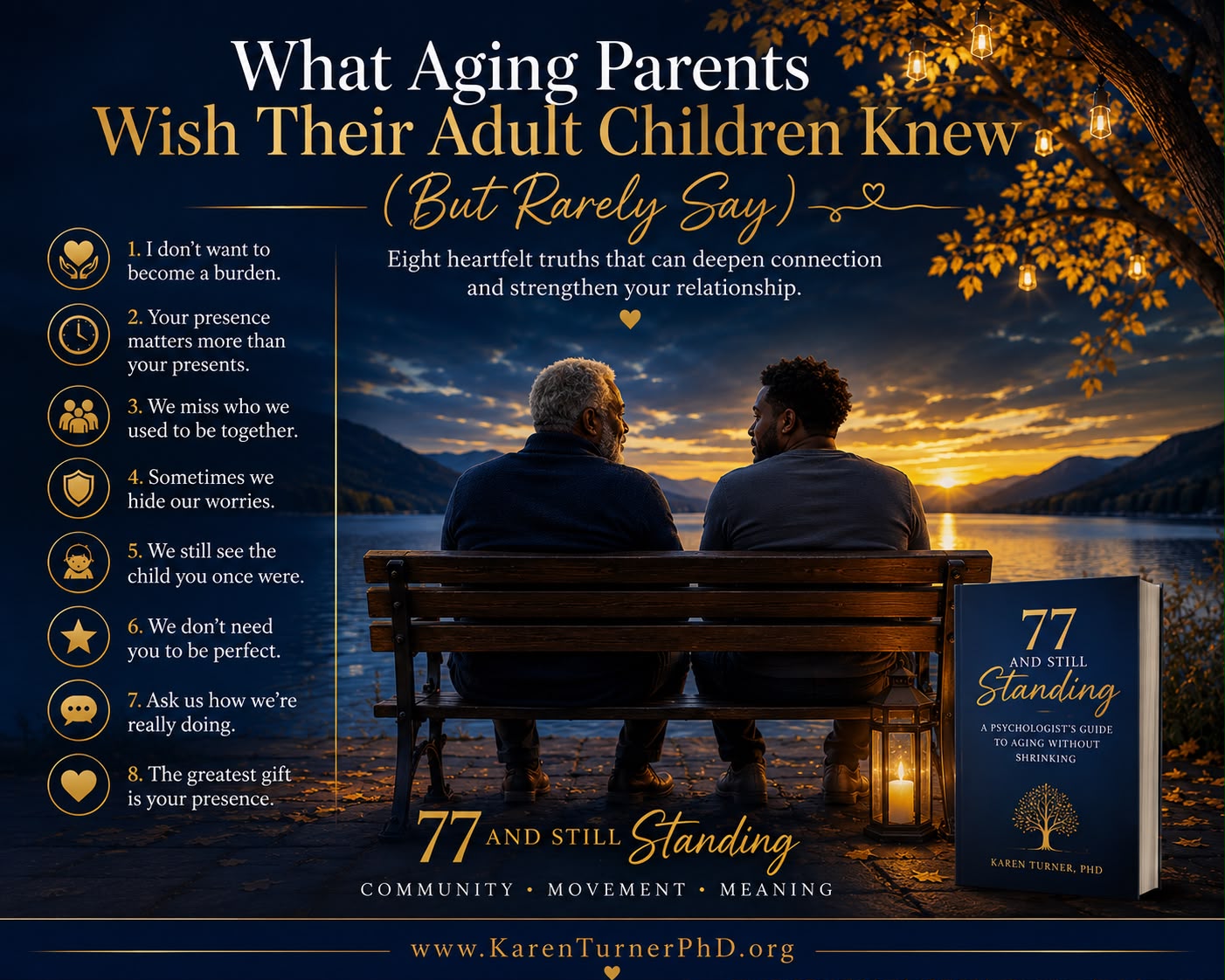
A psychologist’s perspective on staying connected across generations.
One of the greatest privileges of growing older is watching your children build lives of their own. One of the hardest parts is realizing those lives naturally pull them in many directions. As a psychologist, I’ve worked with countless families navigating this transition, and most adult children genuinely love their parents while most parents genuinely want their children to flourish. Yet both generations often carry unspoken feelings, not because they don’t care, but because they don’t always know how to say them. Here are eight truths I’ve heard again and again.
1. “I Don’t Want to Become a Burden.”
Few fears run deeper for older adults. Most parents don’t expect their children to solve every problem, they simply hope that needing help someday won’t change how they’re seen. This fear often intensifies once caregiving actually enters the picture, see When Adult Children Become Caregivers for how families can protect the relationship through that transition. Maintaining dignity often matters as much as maintaining independence.
2. Your Presence Matters More Than Your Presents
Expensive gifts rarely become treasured memories. An unhurried conversation does. Ten minutes without checking your phone may communicate more love than anything money can buy. Presence tells someone, “you still matter to me.”
3. We Miss Who We Used to Be Together
Children grow, careers expand, grandchildren arrive, and life becomes wonderfully busy. Parents understand this. They also quietly miss the spontaneous conversations, family dinners, and ordinary moments that once filled everyday life. Missing those moments isn’t criticism. It’s love.
4. Sometimes We Hide Our Worries
Many older adults minimize health concerns, not because they enjoy pretending, but because they don’t want to become another source of stress. Sometimes the words “I’m fine” are really an act of protection.
5. We Still See the Child You Once Were
No matter how successful, capable, or independent you become, your parents often still remember the little person who reached for their hand. Those memories never disappear. They become part of the way parents continue loving their children.
6. We Don’t Need You to Be Perfect
You don’t have to visit every weekend. You don’t have to say exactly the right thing. You don’t have to fix everything. Most parents simply want to feel included in your life.
7. Ask Us How We’re Really Doing
Many conversations become practical: appointments, medications, schedules. Sometimes older adults simply want someone to ask, “how’s your heart?” Feeling emotionally seen matters at every age.
8. The Greatest Gift Is Your Presence
One afternoon together, one walk, one cup of coffee, one story shared, these moments often become the memories that both generations carry forward. The ordinary becomes extraordinary when we know time is precious.
A Final Thought
Every family is different. Not every parent feels this way, and not every adult child has the same relationship with their parents, some relationships are loving, some are strained, some have been shaped by deep hurt. But when there is goodwill on both sides, small moments of understanding can make an extraordinary difference. The goal isn’t perfection. It’s connection. Sometimes the most meaningful gift we can offer each other is simply to remain curious, compassionate, and present, because love doesn’t disappear as we grow older. It simply hopes to stay included.
Frequently Asked Questions
What do aging parents wish their adult children understood?
More than anything, that presence matters more than perfection. Most aging parents simply want to feel included, heard, and reassured that needing help someday won’t change how their children see them.
Why do aging parents hesitate to ask for help?
Many fear becoming a burden. Asking for help can feel like a threat to their independence and dignity, so they often minimize their needs to protect the relationship rather than strain it.
What do older parents need most from their adult children?
Consistent presence and genuine curiosity about their emotional life, not just help with logistics like appointments, medications, and schedules.
How can adult children stay emotionally connected to aging parents?
By asking open, caring questions like “how’s your heart?”, sharing unhurried time without distraction, and staying curious about who their parent is becoming, not only who they used to be.
What do psychologists say about aging parent relationships?
Psychologists consistently find that small, consistent moments of connection matter more for emotional well-being than grand gestures, and that unspoken fears, like the fear of becoming a burden, often go unaddressed unless directly invited into conversation.
Why do older adults fear becoming a burden?
Because maintaining dignity and independence is central to how they see themselves. Needing help can feel like a threat to how they are perceived by the people they love most, so many quietly hide their worries instead.
Reflection
If you’re an adult child: What’s one small thing you could do this week to help a parent feel seen?
If you’re a parent: What would you most want your adult children to understand about this season of your life?
I’d love to hear your thoughts in the comments.
Related Reading
- When Adult Children Pull Away: Understanding Emotional Distance
- The Loneliness of Being the Strong One
- Adult Children Pull Away From Aging Parents (And What You Can Do About It)
- When Expectations Hurt: Letting Go of the Family Story You Thought Would Happen
- When Your Adult Children Do Not Approve of Your New Relationship
- Does Your Aging Parent Need More Care? A Decision Tree for Levels of Care
- Estranged From Your Adult Children After Divorce? How to Cope and Rebuild
- 77 and Still Standing