
How solo agers can protect their choices, voice, and independence before a crisis.
What will happen if I grow old alone? It is a reasonable question after widowhood, divorce, distance from family, or simply the realization that no traditional caregiver is waiting in the wings.
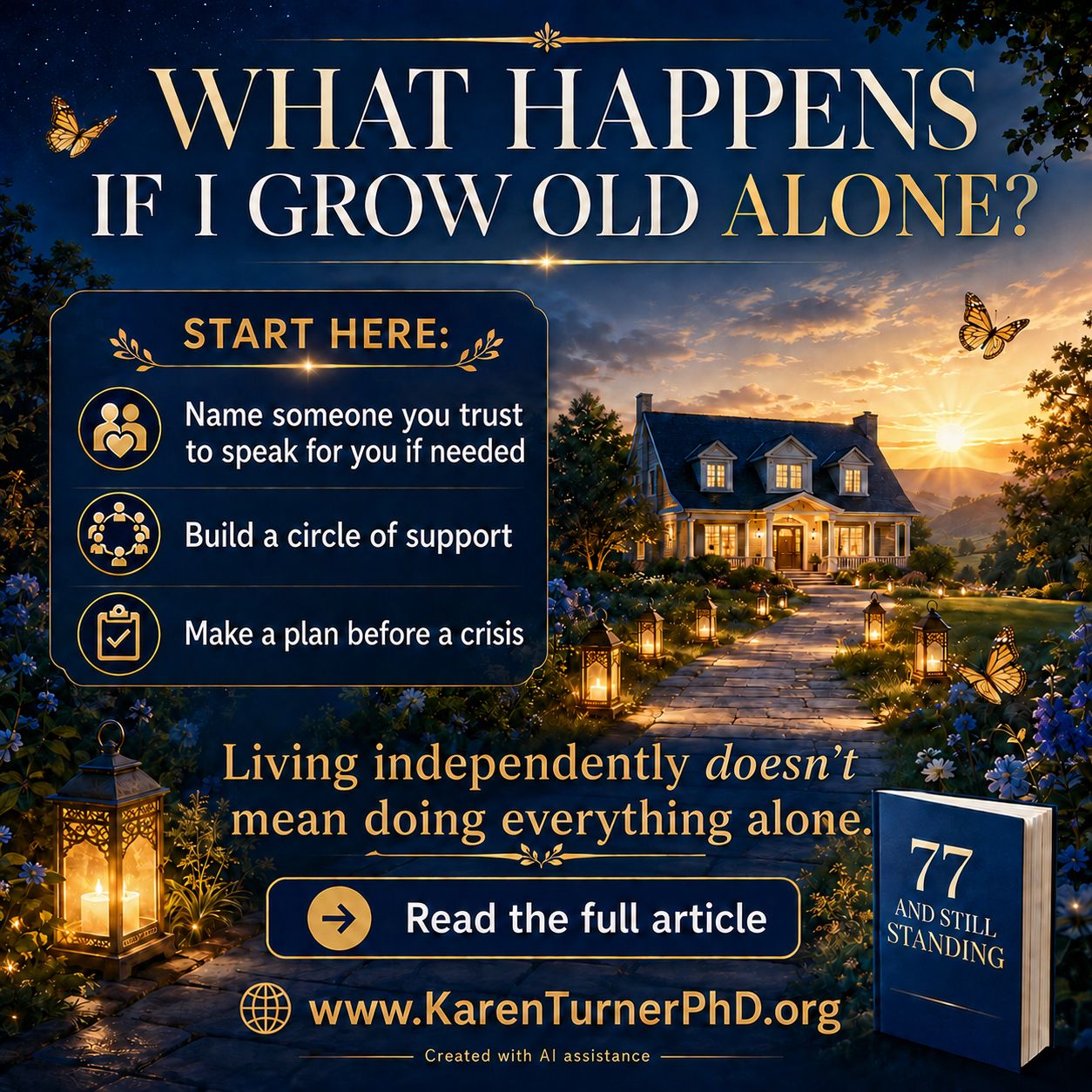
Growing old alone does not mean losing control. Put decision-makers, legal documents, financial safeguards, housing triggers, and a practical emergency file in place before a crisis. The goal is not to avoid help. It is to ensure any help respects your own choices.
The question beneath the question
When people ask what will happen if they grow old alone, they are often asking something more precise: Will I still have a voice when life becomes complicated? The fear is not merely an empty house. It is a hospital decision made without your values, a financial problem handled without your knowledge, or a move made because no one understood what mattered to you. Solo aging can be planned for without assuming that you will become helpless. Planning is how you keep choices available when stress makes choices harder.
When people ask what will happen if they grow old alone, they are often asking something more precise: Will I still have a voice when life becomes complicated? The fear is not merely an empty house. It is a hospital decision made without your values, a financial problem handled without your knowledge, or a move made because no one understood what mattered to you. Solo aging can be planned for without assuming that you will become helpless. Planning is how you keep choices available when stress makes choices harder.
What makes someone a solo ager
A solo ager is someone who may not have a spouse, partner, adult child, or dependable relative able to provide advocacy or care. You may have family and still be functionally alone if distance, illness, conflict, or capacity makes them unavailable. You may live alone and not be a solo ager if friends, professionals, neighbors, and community are dependable. The important question is not who shares your address. It is whether people, documents, and systems exist to protect your wishes when they matter.
A solo ager is someone who may not have a spouse, partner, adult child, or dependable relative able to provide advocacy or care. You may have family and still be functionally alone if distance, illness, conflict, or capacity makes them unavailable. You may live alone and not be a solo ager if friends, professionals, neighbors, and community are dependable. The important question is not who shares your address. It is whether people, documents, and systems exist to protect your wishes when they matter.
Protect decision-making before a crisis
A crisis is a poor time to explain what you value. Consider speaking with a qualified attorney about a health care proxy or power of attorney, a financial power of attorney, and appropriate backups. The same person does not have to do both jobs. A friend may understand your medical values while another person is steadier with records and money. Choose people who are trustworthy, available, emotionally grounded, and willing to follow your preferences. Documents should reflect state law and be shared with the people who may need them.
A crisis is a poor time to explain what you value. Consider speaking with a qualified attorney about a health care proxy or power of attorney, a financial power of attorney, and appropriate backups. The same person does not have to do both jobs. A friend may understand your medical values while another person is steadier with records and money. Choose people who are trustworthy, available, emotionally grounded, and willing to follow your preferences. Documents should reflect state law and be shared with the people who may need them.
Make your wishes usable
A document that no one can locate does not protect you. Create a concise information file: medications, allergies, physicians, insurance, key contacts, advance-directive location, home access instructions, pet care, and the few values that should guide a difficult decision. Tell named people where it is. Review it after a move, diagnosis, death, divorce, or change in a trusted person’s availability. You do not have to predict every medical possibility. You do need to make it easier for someone to understand what matters to you.
A document that no one can locate does not protect you. Create a concise information file: medications, allergies, physicians, insurance, key contacts, advance-directive location, home access instructions, pet care, and the few values that should guide a difficult decision. Tell named people where it is. Review it after a move, diagnosis, death, divorce, or change in a trusted person’s availability. You do not have to predict every medical possibility. You do need to make it easier for someone to understand what matters to you.
Use safeguards around money
Independence includes knowing how your financial life is organized. Make a list of accounts, recurring bills, insurance, taxes, advisers, and secure document locations. Consider alerts for unusual transactions and ask institutions about adding a trusted contact without casually giving someone ownership of an account. A financial power of attorney grants meaningful authority, so obtain local advice and choose carefully. Separate roles when possible. The person with a key to your home does not need access to your money, and a new helper should never become your only source of advice.
Independence includes knowing how your financial life is organized. Make a list of accounts, recurring bills, insurance, taxes, advisers, and secure document locations. Consider alerts for unusual transactions and ask institutions about adding a trusted contact without casually giving someone ownership of an account. A financial power of attorney grants meaningful authority, so obtain local advice and choose carefully. Separate roles when possible. The person with a key to your home does not need access to your money, and a new helper should never become your only source of advice.
Define your housing choices now
Aging in place is more than remaining in a beloved home. It involves stairs, bathrooms, lighting, maintenance, transportation, access to food and care, cost, and human connection. Write down what would make the home no longer workable: repeated falls, unsafe driving, inability to manage medications, increasing confusion, home-care costs beyond your means, or severe isolation. A Plan B does not cancel Plan A. It protects your ability to choose a transition rather than having one imposed during an emergency.
Aging in place is more than remaining in a beloved home. It involves stairs, bathrooms, lighting, maintenance, transportation, access to food and care, cost, and human connection. Write down what would make the home no longer workable: repeated falls, unsafe driving, inability to manage medications, increasing confusion, home-care costs beyond your means, or severe isolation. A Plan B does not cancel Plan A. It protects your ability to choose a transition rather than having one imposed during an emergency.
Build professional independence
Friends offer affection and personal knowledge, but they should not be expected to coordinate every legal, medical, and financial problem. Depending on your circumstances, consult an elder-law attorney, estate-planning attorney, care manager, social worker, patient advocate, daily money manager, or fiduciary professional. Ask about fees, licenses, insurance, references, oversight, and exactly what authority a professional has. Professional support can preserve friendships by preventing a friend from becoming responsible for work they cannot reasonably perform.
Friends offer affection and personal knowledge, but they should not be expected to coordinate every legal, medical, and financial problem. Depending on your circumstances, consult an elder-law attorney, estate-planning attorney, care manager, social worker, patient advocate, daily money manager, or fiduciary professional. Ask about fees, licenses, insurance, references, oversight, and exactly what authority a professional has. Professional support can preserve friendships by preventing a friend from becoming responsible for work they cannot reasonably perform.
Practice accepting limited help
Asking for help need not mean surrendering control. Start with a narrow request: someone to join a medical call, keep an emergency key, drive you home after a procedure, or check that you arrived safely. Specific requests let people agree honestly. They also help you learn which supports are dependable. A support circle is useful, but this article’s central point is that your circle should reinforce your authority. Help should make your life more manageable, not make your voice disappear.
Asking for help need not mean surrendering control. Start with a narrow request: someone to join a medical call, keep an emergency key, drive you home after a procedure, or check that you arrived safely. Specific requests let people agree honestly. They also help you learn which supports are dependable. A support circle is useful, but this article’s central point is that your circle should reinforce your authority. Help should make your life more manageable, not make your voice disappear.
A simple personal-control checklist
Choose two emergency contacts. Name a primary and backup health decision-maker if appropriate. Review financial authority with qualified advice. Organize your medical, legal, and financial information. Identify the home conditions that would trigger a reassessment. Test transportation and delivery options. Decide how you will communicate an emergency. Review the whole plan each year. These steps cannot guarantee that life will remain easy. They can make it far more likely that care, if needed, happens with your knowledge, values, and consent.
Choose two emergency contacts. Name a primary and backup health decision-maker if appropriate. Review financial authority with qualified advice. Organize your medical, legal, and financial information. Identify the home conditions that would trigger a reassessment. Test transportation and delivery options. Decide how you will communicate an emergency. Review the whole plan each year. These steps cannot guarantee that life will remain easy. They can make it far more likely that care, if needed, happens with your knowledge, values, and consent.
Independence is a voice, not isolation
Growing older alone does not automatically mean growing older unprotected. Family can be valuable, but family is not the only source of care, advocacy, loyalty, or connection. You can build a thoughtful arrangement from friends, professionals, clear documents, practical safeguards, and choices made while they are yours. Aging without shrinking does not mean insisting you will never need anyone. It means preparing so that receiving help does not erase your identity or your voice.
Growing older alone does not automatically mean growing older unprotected. Family can be valuable, but family is not the only source of care, advocacy, loyalty, or connection. You can build a thoughtful arrangement from friends, professionals, clear documents, practical safeguards, and choices made while they are yours. Aging without shrinking does not mean insisting you will never need anyone. It means preparing so that receiving help does not erase your identity or your voice.
Frequently Asked Questions
Can a friend be my power of attorney?
In many states a trusted friend may be named, but requirements vary and a financial power of attorney grants substantial authority. Obtain qualified local legal advice and name a backup carefully.
Can I age safely at home if I live alone?
Many people can with appropriate planning for accessibility, transport, emergency response, maintenance, finances, connection, and in-home services.
When should I begin planning?
Begin while healthy enough to assess people, documents, services, and housing options carefully. Early planning provides more choices.
Related Reading
- Who Will Take Care of Me If I Age Alone?
- Aging Alone Without Feeling Alone
- Should I Stay in My Home or Move? A Decision Guide for Older Adults
- How Seniors Can Avoid Scams and What to Do If You Have Been Scammed
- 77 and Still Standing
Sources and guidance
- Eldercare Locator
- National Institute on Aging: Aging in Place
- Consumer Financial Protection Bureau: Resources for Older Adults
This article provides general educational information and is not individualized medical, financial, or legal advice.