Many people assume looking younger is about genetics or expensive treatments. Research suggests something deeper: psychological resilience, purpose, curiosity, meaningful relationships, and adaptability all shape how we experience aging. This article explains why some people stay vibrant well into later life, and offers practical ways to cultivate those same qualities.
We’ve all met them. They’re in their seventies, eighties, or even nineties, yet they seem remarkably youthful, not because they have perfect skin or endless energy, but because they carry themselves differently. Their eyes stay curious, their laughter comes easily, and they still make plans and still dream. People often assume they simply inherited good genes. Genes certainly matter, but they’re only part of the story. As a psychologist, I’ve learned that what keeps people feeling young is often less about biology and far more about psychology.
Is Looking Younger Really Just About Genetics?
No, not primarily. When researchers study healthy aging, they consistently find that emotional and psychological factors strongly influence quality of life. People who age well tend to stay curious, keep learning, maintain meaningful relationships, adapt to change, believe they still have something to contribute, and find purpose beyond their previous roles. None of that requires perfect health. It requires a mindset that keeps engaging with life.
What Is Psychological Flexibility, and Why Does It Matter?
One of the strongest predictors of successful aging is something psychologists call psychological flexibility. Instead of clinging to how life used to be, psychologically flexible people ask, “given where I am today, what’s still possible?” They adjust, they learn, and they find new ways to create meaning, which is very different from shrinking.
How Does Curiosity Keep the Brain Young?
The brain thrives on novelty. Trying a new hobby, learning a language, reading about an unfamiliar topic, meeting new people, or traveling somewhere different all stimulate neural pathways and help keep the brain engaged throughout life. Curiosity isn’t a personality trait reserved for the young. It’s a habit anyone can build.
Why Does Purpose Matter So Much for Healthy Aging?
Many people lose their sense of purpose after retirement, widowhood, or once children become independent, and the calendar suddenly empties out. Without realizing it, people stop looking forward. But purpose doesn’t have to mean starting another career: it might mean mentoring, volunteering, writing your story, learning watercolor painting, joining a book club, or helping a grandchild discover the world. Purpose isn’t measured by income. It’s measured by engagement.
Do Relationships Really Affect How We Age?
Yes, significantly. People who seem younger often invest in connection: they laugh with friends, stay involved with family, ask questions, and listen. Loneliness doesn’t just affect mood, it can influence physical health, memory, stress, and overall well-being, which makes meaningful relationships among the strongest protective factors in healthy aging. If loneliness after 60 feels like your experience right now, The Hidden Psychology of Loneliness After 60 explores that specifically.
Does the Story You Tell Yourself About Aging Matter?
It matters enormously. Some people spend decades saying “I’m too old,” “I’ve missed my chance,” or “that part of my life is over.” Others ask instead, “what would I enjoy learning next?” Those are two entirely different stories, and they often lead to two entirely different lives.
Do You Have to Reinvent Yourself to Age Well?
No. One of the biggest myths about aging is that you must reinvent yourself. Healthy aging isn’t about becoming someone else, it’s about becoming more fully yourself. You don’t erase your history, you build on it. You don’t pretend you haven’t experienced loss, you learn that loss and growth can exist together. If reinvention still feels like the wrong word for what you’re after, Why We Need Recalibration, Not Reinvention, After 60 makes that same case in more depth.
The Bottom Line
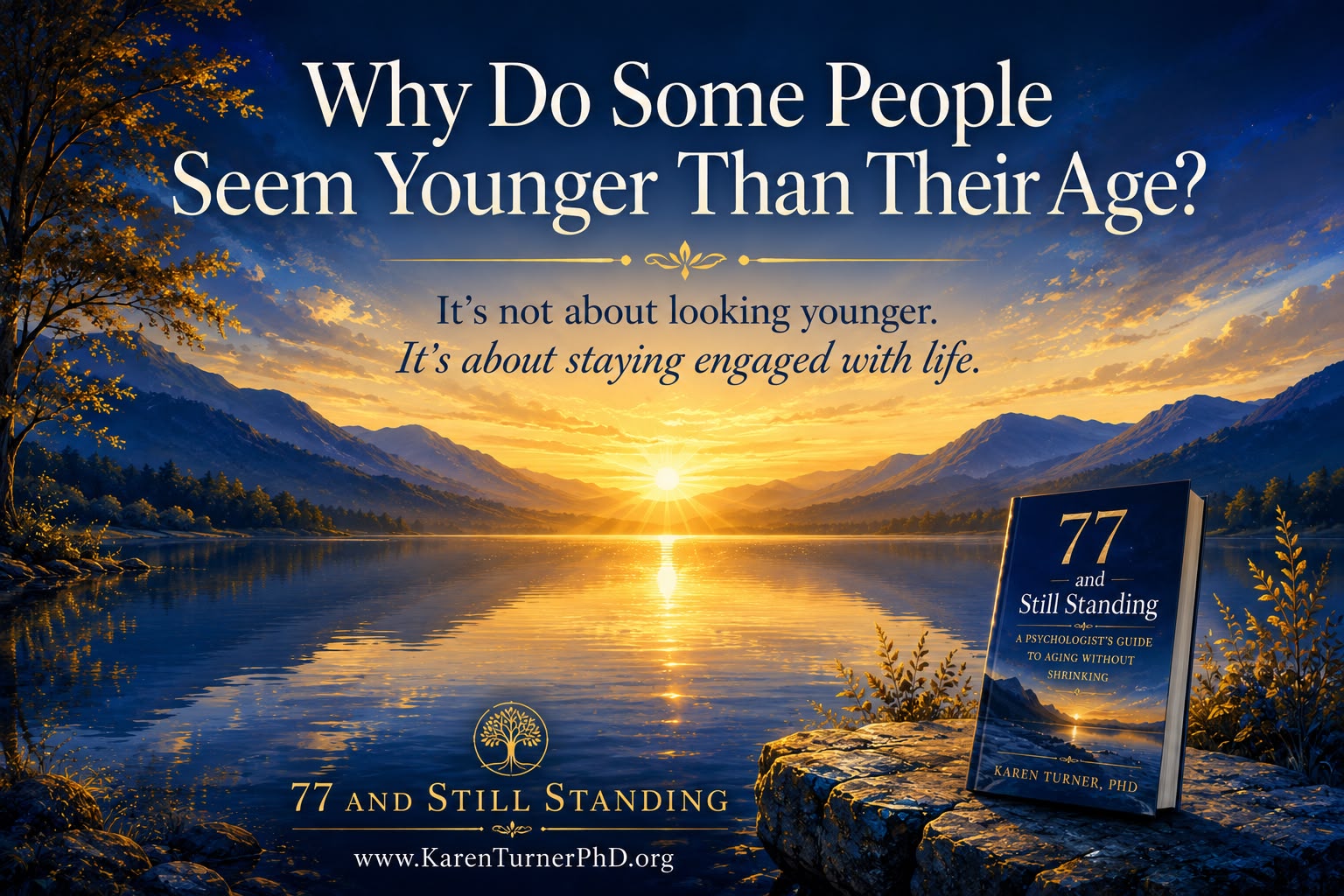
The people who seem younger than their age aren’t necessarily trying to look younger. They’re still participating in life, still asking questions, still building relationships, and still discovering new parts of themselves. Growing older is inevitable. Growing smaller doesn’t have to be. That, more than anything, is the heart of healthy aging.