

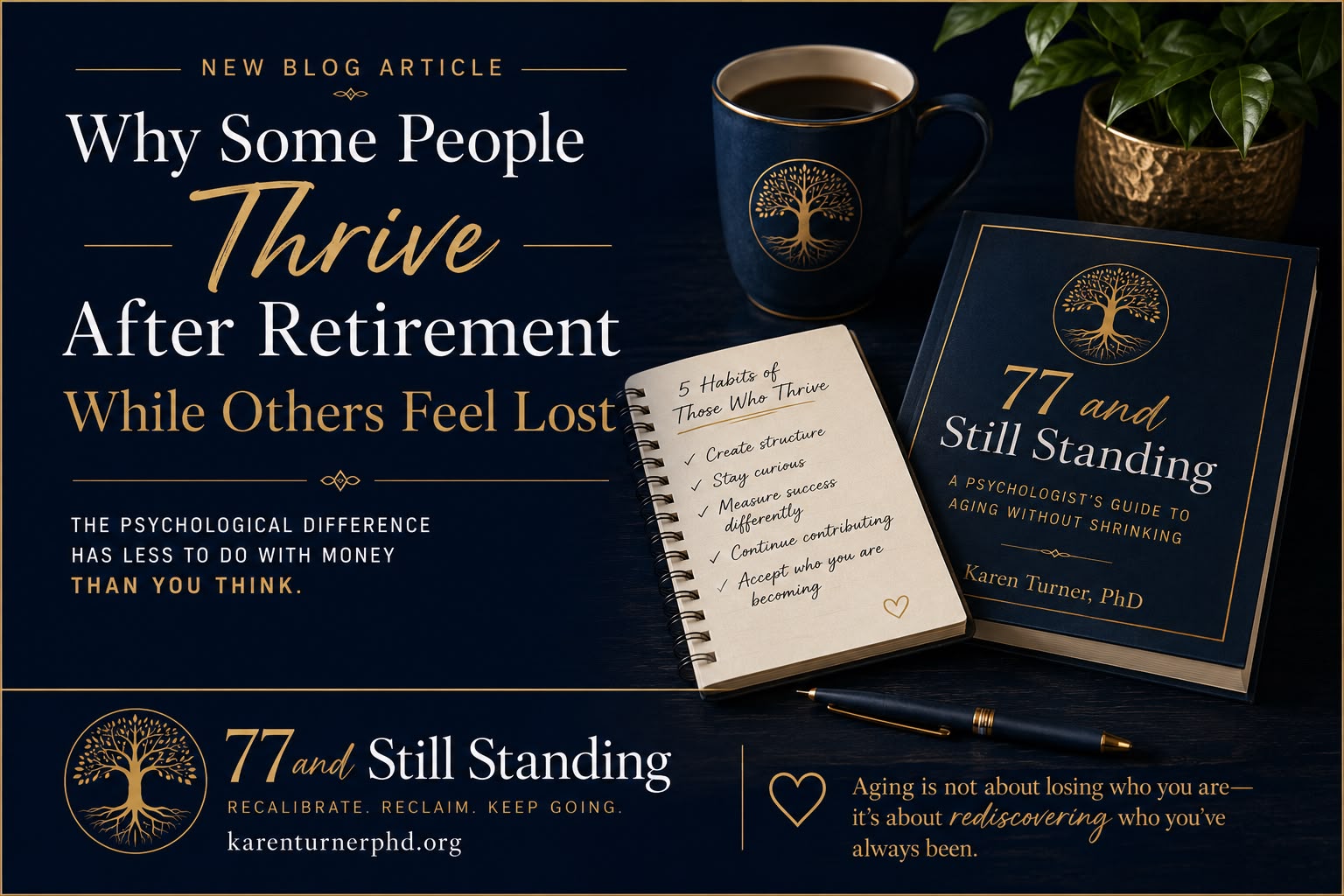
Why Some People Thrive After Retirement While Others Feel Lost
The Psychological Difference Has Less to Do With Money Than You Think
Retirement is often portrayed as the reward at the end of a long career—a time to relax, travel, and finally enjoy life.
Yet for many people, retirement feels surprisingly different than they expected.
Some flourish.
They discover new interests, deepen relationships, volunteer, mentor, travel, and wake up excited about each day.
Others, despite having financial security and good health, quietly struggle. They feel disconnected, restless, or uncertain about where they belong.
Why do two people with similar careers, similar resources, and similar ages experience retirement so differently?
As a psychologist, I believe the answer isn’t found in their bank accounts.
It’s found in their mindset.
⸻
Retirement Doesn’t Change You—It Reveals You
Many people think retirement creates happiness or unhappiness.
It doesn’t.
Retirement often magnifies the habits and ways of thinking that were already there.
If your life has always included curiosity, friendships, hobbies, flexibility, and purpose, retirement gives those qualities more room to grow.
If work was your only source of identity, structure, or meaning, retirement may expose a void you never realized existed.
In other words…
Retirement isn’t just a financial transition.
It’s a psychological one.
⸻
The Five Habits of People Who Thrive
After years of observing adults navigate major life transitions, several patterns consistently emerge.
1. They Replace Structure Instead of Losing It
Work naturally provides routines.
Meetings.
Appointments.
Deadlines.
Morning coffee before work.
Lunch with colleagues.
Without realizing it, work organizes our days.
Successful retirees intentionally create new routines.
Morning walks.
Volunteer commitments.
Exercise classes.
Learning something new.
Regular lunches with friends.
Purpose often follows structure—not the other way around.
⸻
2. They Stay Curious
One of the strongest predictors of healthy aging isn’t intelligence.
It’s curiosity.
People who continue asking questions continue growing.
They learn technology instead of fearing it.
They read.
Take classes.
Visit museums.
Try pickleball.
Join book clubs.
Experiment with painting.
Explore genealogy.
Curiosity keeps the brain engaged while reminding us that life is still unfolding.
⸻
3. They Measure Success Differently
During our careers, success is often measured externally.
Promotions.
Titles.
Income.
Recognition.
Retirement asks a different question:
How do you define a good life when no one is giving you a performance review?
People who thrive gradually replace achievement with fulfillment.
They stop asking,
“Am I accomplishing enough?”
and begin asking,
“Am I living in a way that feels meaningful?”
⸻
4. They Continue Contributing
One of the biggest myths about retirement is that happiness comes from doing less.
Research consistently suggests something different.
People who continue contributing—to family, friends, neighbors, charities, mentoring, or their communities—often report greater life satisfaction.
Contribution doesn’t have to be grand.
Sometimes it’s simply becoming the person who listens well.
Who encourages others.
Who shares wisdom earned over decades.
Purpose rarely disappears.
It simply changes form.
⸻
5. They Accept That Reinvention Isn’t Required
Perhaps the healthiest retirees understand something many people never learn.
You don’t have to become someone entirely new.
You simply need permission to become more fully yourself.
That shift removes enormous pressure.
Retirement isn’t an audition.
It’s an opportunity.
⸻
Why Others Feel Lost
Feeling lost after retirement isn’t a sign of weakness.
It’s often the result of losing several important psychological anchors all at once.
You may lose:
* Daily routine
* Social interaction
* Recognition
* Identity
* Predictability
* A feeling of being needed
That’s a significant adjustment.
Many people blame themselves when what they’re actually experiencing is a normal human response to major change.
Recognizing this can replace self-criticism with self-compassion.
⸻
One Question Changes Everything
Instead of asking,
“What am I supposed to do now?”
Ask,
“What kind of life do I want to build now?”
The first question assumes retirement is an ending.
The second assumes it’s a beginning.
That subtle shift changes everything.
⸻
Thriving Is Built One Choice at a Time
People who thrive after retirement rarely wake up one morning transformed.
They make small decisions repeatedly.
They call a friend.
Join a class.
Walk outside.
Volunteer.
Read a new book.
Say yes to something unfamiliar.
Over time, those ordinary choices become an extraordinary life.
⸻
Final Thoughts
The difference between thriving and merely getting through retirement is rarely luck.
It’s the willingness to remain engaged—with yourself, with others, and with the world around you.
Your career may have ended.
Your capacity to grow has not.
Your opportunities to contribute have not.
Your ability to find joy has not.
Retirement is not the end of your story.
It is the beginning of a chapter that you have the freedom to write yourself.
And perhaps that’s the greatest gift retirement offers—not more time, but more choice.
⸻
Key Takeaways
* Retirement is primarily a psychological transition, not just a financial one.
* Thriving retirees intentionally replace structure, stay curious, continue contributing, and redefine success.
* Feeling lost after retirement is common and often reflects the loss of routine, identity, and connection—not personal failure.
* Small, consistent choices create purpose and fulfillment over time.
* Aging well isn’t about staying busy. It’s about staying engaged.