

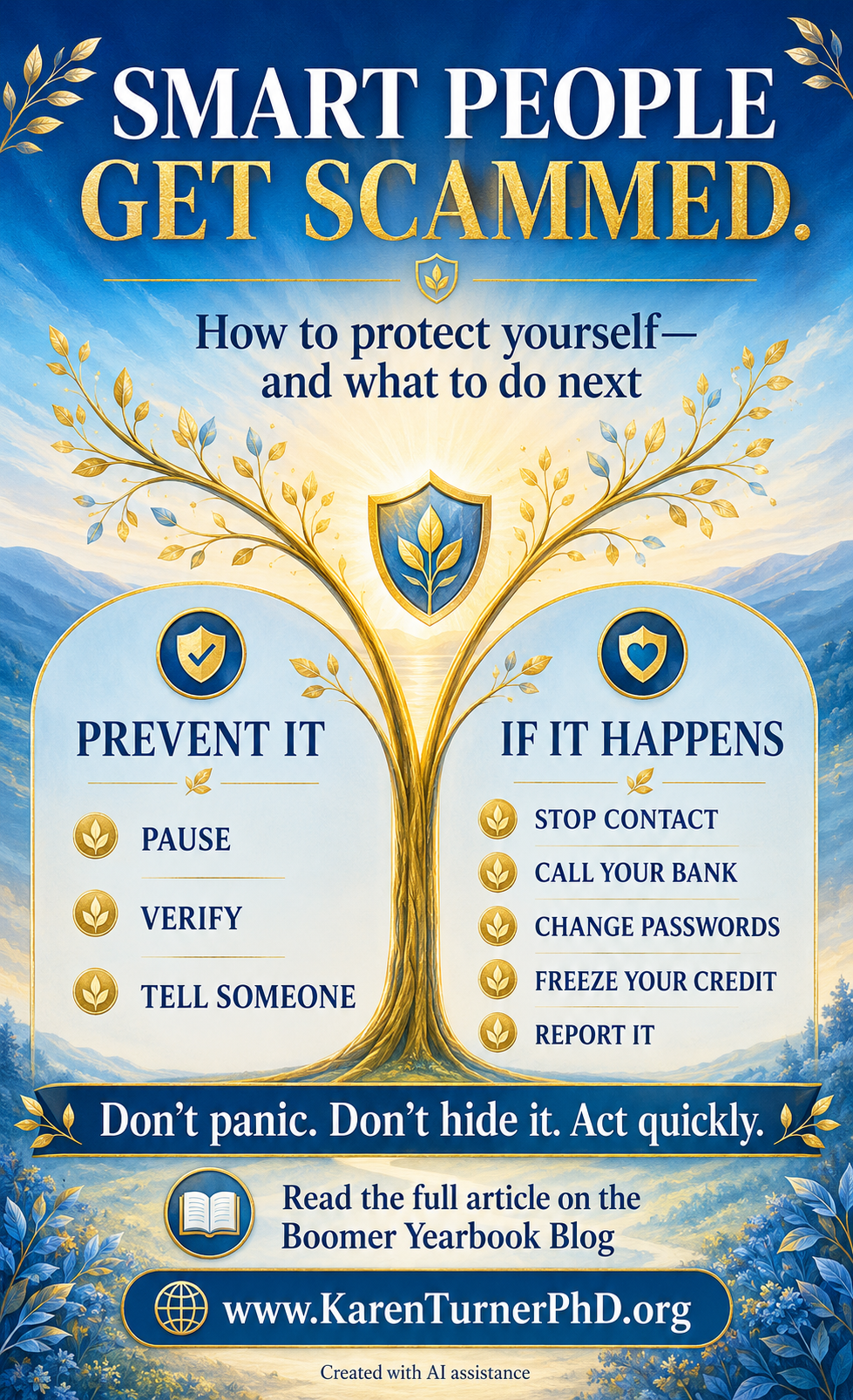
Smart people get scammed. The important thing is not to panic, hide what happened, or let embarrassment keep you from acting quickly.
Scams succeed because they are built around human psychology, not because the victim is foolish. A scammer tries to create urgency, borrow authority, and push you into a decision before you have time to think. The story may involve a bank problem, a suspended benefit, a grandchild in trouble, a computer warning, a debt, or a sudden opportunity that is about to disappear.
Older adults are often targeted because they may have savings, home equity, established credit, and a habit of being polite to callers. But age is not what causes a scam. Trust, fear, love, loneliness, urgency, and confusion can be exploited at any age. That is why the first defense is not intelligence. It is a pause.
According to the Federal Trade Commission, consumers reported losing approximately $16 billion to scams in 2025, up from $12.8 billion the year before. Because many victims never report what happened, the true loss is probably higher.
If you are already feeling ashamed, start here: being deceived does not make you weak. It means someone deliberately studied how to pressure people like you.
Before sending money or disclosing personal information: pause; do not act under pressure; hang up or stop responding; verify the story independently; call someone you trust; never move money to protect it; and never pay an unexpected caller with gift cards, cryptocurrency, cash, or a wire transfer.
If you have already sent money or disclosed personal information, contact your bank immediately, secure your accounts, preserve the evidence, protect your credit, and report the scam.
Speed matters, but shame should never stop you from asking for help.
Quick reminder: pause before acting, verify the story independently, and tell someone you trust.
Why Intelligent People Fall for Scams
We often imagine that we would immediately recognize a scam. But sophisticated scams rarely begin with an obviously ridiculous request. They begin with something believable.
A caller may know your name, address, bank, relatives, or recent purchases. A message may appear to come from a real company. Caller identification can be manipulated, email addresses can be imitated, and artificial intelligence can now reproduce a familiar voice.
- Your bank account has been compromised.
- Your Social Security number was connected to a crime.
- Your grandchild has been arrested or injured.
- Your computer has been hacked.
- You owe money immediately.
- A romantic partner needs emergency assistance.
- You have an opportunity that will disappear unless you act now.
Once fear or excitement takes over, clear thinking becomes more difficult. This is not a sign of diminished intelligence. It is a predictable human response to emotional pressure.
Seven Rules That Can Help Protect You
- Pause Before You Respond. If someone says you must act immediately, take that as a reason to slow down. A legitimate bank, government agency, police department, or family member will allow you time to verify what is happening.
- Verify the Story Independently. Never use the telephone number, email address, or website supplied in an unexpected message. Call the number on the back of your card, type the known website into your browser, or call your family member using a number already stored in your phone.
- Never Move Money to Protect It. No legitimate government agency or bank will tell you to move your money into a special account, purchase cryptocurrency, withdraw cash, buy gold, or give money to a courier to keep it safe.
- Recognize Suspicious Forms of Payment. Gift cards, cryptocurrency, Bitcoin ATMs, wire transfers, cash sent by mail, cash or gold collected by a courier, payment applications, and checks followed by requests to return part of the money are common scam payment methods.
- Never Share Verification Codes or Allow Remote Access. Do not read a one-time code aloud to an unexpected caller. Do not allow remote control of your computer because of a pop-up or sudden warning.
- Create a Trusted-Person Rule. Choose at least one person you will contact before sending money, making an unexpected investment, buying gift cards, moving money because of a call, sharing bank or benefit information, or allowing remote access to your computer.
- Strengthen Your Accounts Before Something Happens. Use unique passwords, turn on multifactor authentication, review statements, secure email, keep devices updated, limit social-media exposure, and consider a credit freeze if you are not applying for new credit.
Common Scams Targeting Older Adults
- Government and bank impersonation scams.
- Grandchild and family-emergency scams.
- Technology-support scams.
- Romance scams.
- Investment and cryptocurrency scams.
- Medicare and health-care scams.
- Home-repair and contractor scams.
What Should You Do If You Have Already Been Scammed?
The first hours can matter. Even if you are uncertain whether the situation was fraudulent, begin taking protective steps.
- Stop All Contact. Do not send more money. Block the telephone number, email address, and social-media account.
- Contact Your Financial Institution Immediately. Call the bank, credit-card company, wire-transfer service, payment application, gift-card company, or cryptocurrency platform involved and ask for the fraud department.
- Secure Your Accounts. Change your email password first, then banking and financial passwords, PINs, and any reused passwords. Turn on multifactor authentication and remove unknown devices.
- Protect Your Credit. Consider freezing your credit with Equifax, Experian, and TransUnion if personal information was exposed.
- Preserve the Evidence. Save emails, texts, telephone numbers, website addresses, receipts, gift-card information, bank records, wallet addresses, names, titles, dates, and times.
- Report the Scam. Report consumer fraud to ReportFraud.ftc.gov, internet fraud to IC3.gov, identity theft to IdentityTheft.gov, and suspected elder financial exploitation to Adult Protective Services.
- Watch for Recovery Scams. Do not pay anyone who guarantees that lost money can be recovered.
You Were Deceived. You Are Not Foolish.
After a scam, many people experience shame, anger, grief, sleeplessness, and a loss of confidence. The financial loss can be devastating, but the emotional injury can be equally painful.
Please tell someone. Secrecy protects the scammer, not the victim. Being deceived does not erase a lifetime of intelligence or competence.
The first mistake may have been believing the scammer. Do not let the second mistake be suffering alone.
Frequently Asked Questions
What should a senior do immediately after being scammed?
Stop communicating with the scammer and contact the bank, credit-card company, or payment service immediately. Ask the fraud department whether the transaction can be stopped, recalled, reversed, or disputed. Then change passwords, protect your credit, preserve the evidence, and report the fraud.
Can a bank recover money lost in a scam?
Sometimes, but recovery is not guaranteed. The possibility depends on the payment method, how much time has passed, and whether the funds have already been moved. Contacting the financial institution immediately offers the best chance of limiting the loss.
Should I freeze my credit after a scam?
Consider freezing your credit if a scammer obtained your Social Security number or other information that could be used to open accounts. A credit freeze is free, but it must generally be placed separately with Equifax, Experian, and TransUnion.
How can I tell whether a family-emergency call is real?
Hang up and call the family member directly using a telephone number you already know. Do not rely on the caller’s voice because artificial intelligence can imitate voices. A private family emergency word can add another layer of protection.
Will a government agency ask for gift cards or cryptocurrency?
No legitimate government agency will demand payment through gift cards, cryptocurrency, a Bitcoin ATM, a payment application, a wire transfer, or cash delivered to a courier.
Where should elder fraud be reported?
Report consumer fraud to ReportFraud.ftc.gov and internet-related fraud to IC3.gov. Report identity theft at IdentityTheft.gov. Suspected financial exploitation by a caregiver, relative, or other trusted person can also be reported to Adult Protective Services.
What if the scammer had remote access to my computer?
Disconnect the device from the internet. Do not use it for banking or other sensitive activity until it has been inspected. From a safe device, change your email and financial passwords, enable multifactor authentication, and contact your financial institutions.
Educational note: This article provides general guidance only, not individualized legal, tax, financial, or medical advice.
Last reviewed: 2026-08-26
Official and Authoritative Sources
- Federal Trade Commission — business and government impersonator scams targeting older adults
- Federal Trade Commission — reporting and 2025 reported-loss information
- FBI Internet Crime Complaint Center — elder fraud response steps
- IdentityTheft.gov — immediate recovery steps
- Consumer Financial Protection Bureau — reporting elder financial abuse
- Consumer Financial Protection Bureau — Money Smart for Older Adults