

If you looked once and felt certain, then looked again and changed your answer, the illusion did exactly what it was designed to do. What appears simple at first becomes surprisingly slippery when light, color, texture, and expectation begin competing for your attention.
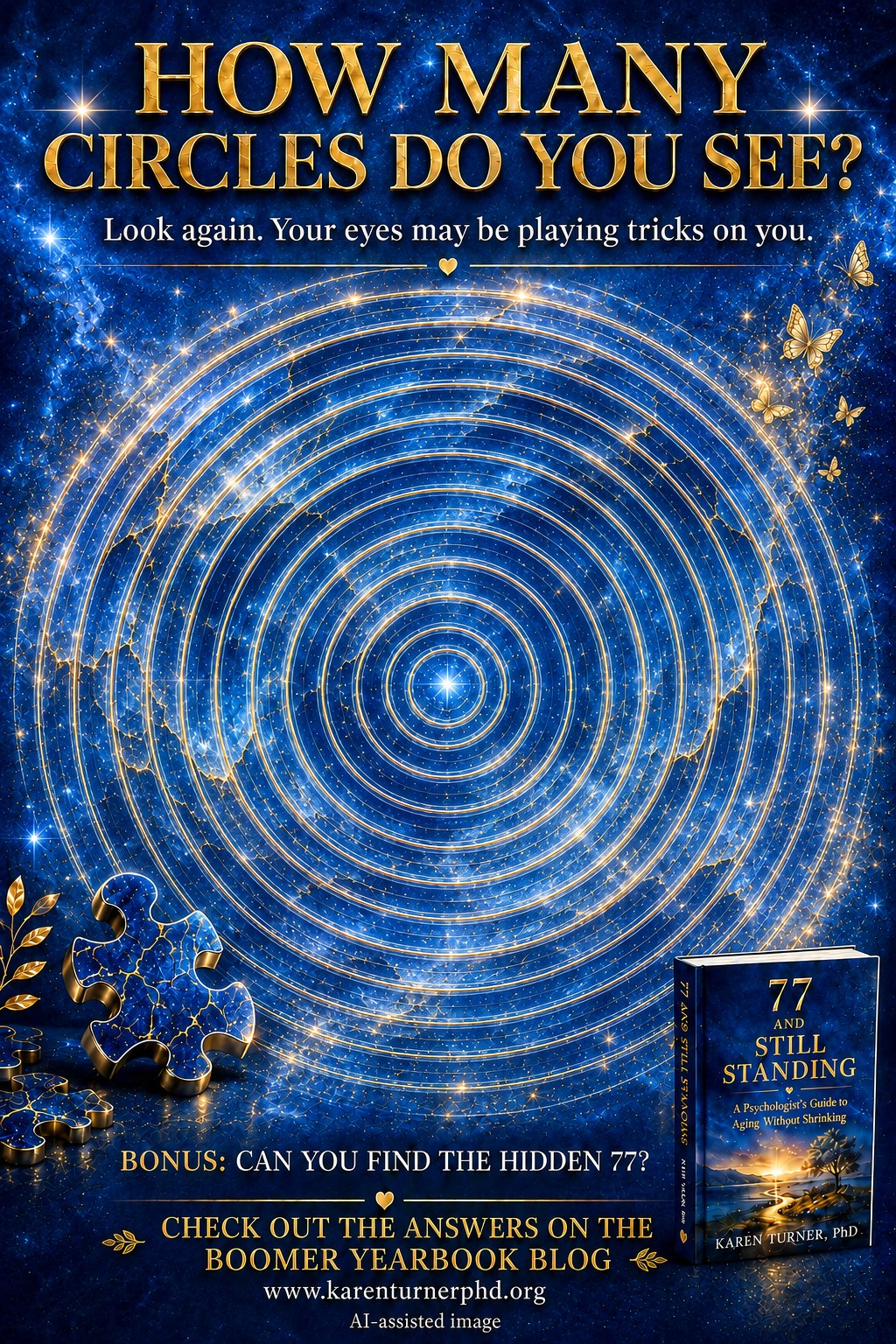
How Many Circles Are in the Optical Illusion?
The intended answer is 14 primary circles. Some viewers may count more if they include the fine decorative outlines, bright glow lines, or outer arcs as separate circles. That difference is part of the illusion, not a mistake.
There is nothing wrong with your eyes or your reasoning if your number was different. The sapphire bands provide the main circular structure, while the gold highlights, shadows, and reflections create secondary edges. Your brain must decide which boundaries belong together, and different viewers may organize those boundaries differently.
Where Is the Hidden 77?
The “77” is intentionally woven into small breaks, angles, and negative spaces among the rings rather than printed as an obvious number. Look slightly above and to the right of center, then let your eyes soften instead of studying every line. The idea is to discover the suggestion of two sevens, not a large, plainly drawn 77.
If you did not see it immediately, that was the point. Once the mind is given a clue, it begins reorganizing the same visual information and looking for a new pattern.
Why Do People Count Different Numbers?
Vision is not a camera that records every detail with perfect neutrality. The brain rapidly groups edges, contrast, light, shadow, and repeated shapes into a picture that feels coherent. In this design:
- Concentric rings create several competing boundaries.
- Gold highlights can look like additional circles.
- Shadows can separate one band into what appears to be two.
- Sparkles and texture pull attention away from the complete shape.
- The hidden-number challenge encourages the brain to search for angles inside curves.
Is This Optical Illusion a Psychological Test?
No. This is a perception game, not a psychological test. The number of circles you see does not diagnose anger, trauma, intelligence, personality, or mental health. It simply shows how easily visual context can influence what we notice first.
That distinction matters. Puzzles can be playful, thought provoking, and even useful for discussing attention, but they should not be presented as validated psychological assessments when they are not.
What a Second Look Can Teach Us
What we notice first is not always all that is there. Sometimes a second look changes the picture. That is true of optical illusions, and often of life. Curiosity gives us room to revise an answer without feeling that the first answer made us foolish.
Explore more Nimble Mind puzzles, reflections on aging, and conversations about living fully in the Boomer Yearbook Blog. You may also enjoy What Do You See First? The Psychology Behind Optical Illusions and a Nimble Mind.
Frequently Asked Questions
How many circles are in the optical illusion?
The intended answer is 14 primary circles. Some viewers may count more if they include glow lines, fine outlines, or outer decorative arcs.
Why do people count different numbers?
Highlights, shadows, and textured edges create competing visual boundaries. The brain may group those boundaries differently from one viewing to the next.
Is this optical illusion a psychological test?
No. This is a visual perception game, not a validated psychological assessment. It does not diagnose anger, trauma, intelligence, personality, or mental health.
Where is the hidden 77?
It is suggested by small breaks, angles, and negative spaces slightly above and to the right of the center of the circle field. It is intentionally subtle.
77 and Still Standing: A Psychologist’s Guide to Aging Without Shrinking