
Understanding Normal Forgetfulness, Memory Anxiety, and the Warning Signs of Dementia
You walk into a room and forget why you went there. A familiar name refuses to come to you until several minutes later. You misplace your glasses and eventually discover them on top of your head. For many older adults, moments like these trigger an immediate and frightening question: is this normal aging, or is it the beginning of cognitive decline?
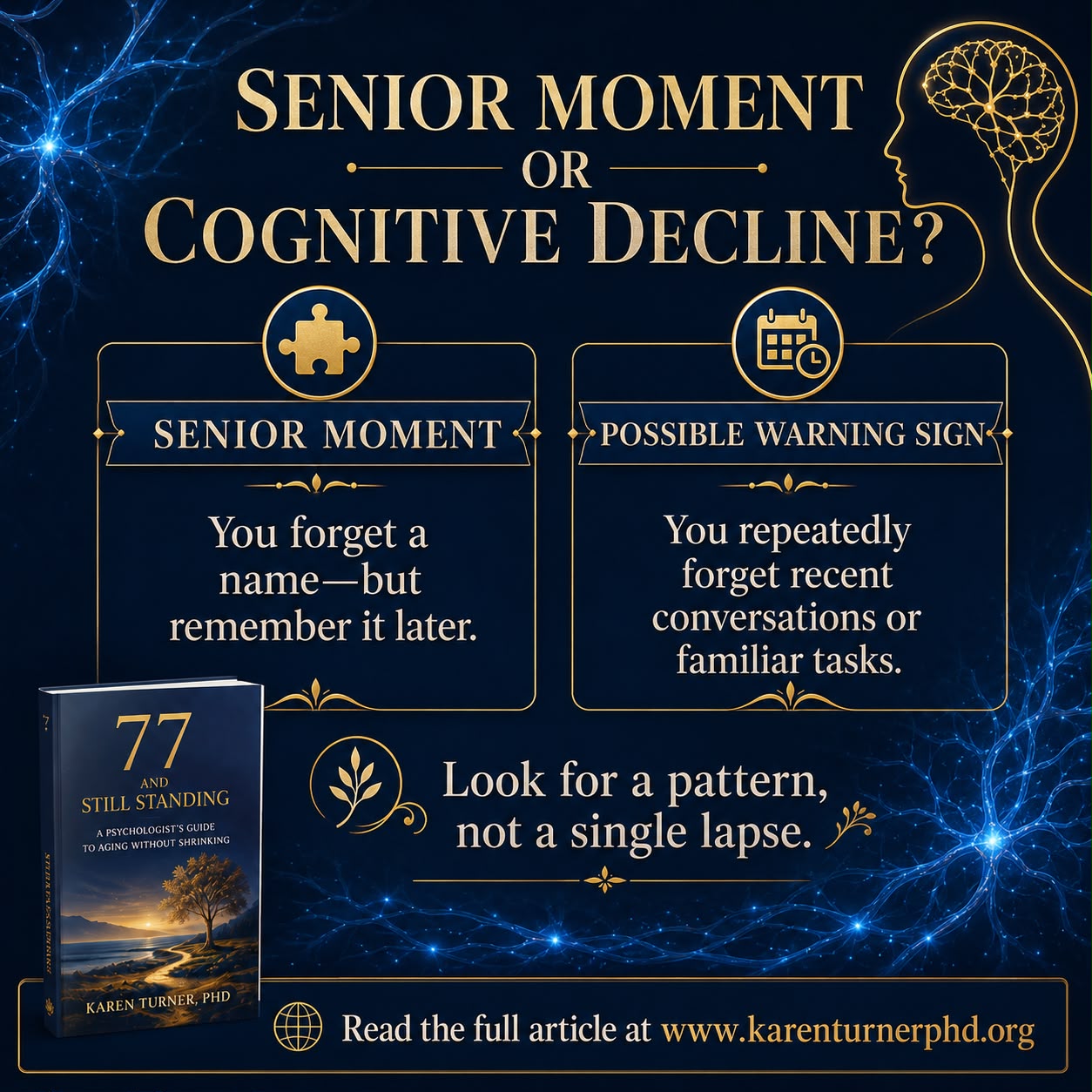
The fear is understandable. Memory changes become more noticeable with age, and dementia receives a great deal of attention. But not every lapse is a warning sign. The more useful question is not whether you ever forget, because everyone does. The question is whether the change is persistent, worsening, and interfering with everyday life.
What Is a Senior Moment?
A senior moment is an occasional lapse in memory or attention that does not prevent you from functioning independently. The information may be temporarily difficult to retrieve, but it usually returns later. You might forget an appointment and remember it afterward, pause while searching for a word, or lose track of why you entered the kitchen. These experiences can be annoying, but they are common and are not, by themselves, evidence of dementia.
Normal aging can make the brain a little slower at retrieving information. Think of it as a filing system that still contains the document but takes longer to locate it. The name, word, or reason you walked into the room often comes back once you stop straining to remember.
What Does Normal Age-Related Forgetfulness Look Like?
Ordinary age-related memory changes are occasional, and they do not significantly disrupt your ability to manage your life. They may include:
- Occasionally misplacing an item.
- Forgetting a name but recalling it later.
- Needing more time to learn unfamiliar technology.
- Making an occasional error while balancing a checkbook.
- Sometimes forgetting which day it is and then remembering.
You may also become more easily distracted when you are tired, worried, rushed, or trying to do several things at once. The key distinction is that these lapses are occasional and do not significantly disrupt your ability to manage your life. You still recognize familiar people, follow conversations, make sound decisions, keep appointments with reminders, handle your finances, and find your way through familiar places.
What Else Affects Memory Besides Age?
Memory is highly sensitive to physical and emotional conditions, not just to the passing years. Poor sleep, anxiety, grief, depression, chronic stress, pain, dehydration, infection, thyroid problems, vitamin deficiencies, hearing or vision loss, and medication side effects can all affect concentration and recall.
Even the fear of dementia can make memory feel worse. When you monitor every lapse and interpret it as danger, anxiety consumes some of the attention the brain needs to encode and retrieve information. This is why one difficult week does not define your cognitive health.
It is important to notice the circumstances surrounding a lapse. Were you exhausted? Upset? Distracted? Taking a new medication? Recovering from an illness? Context matters.
When Is Forgetfulness More Concerning?
Cognitive decline is more than occasional absentmindedness. Warning signs tend to form a pattern. They become more frequent, may worsen over time, and begin to interfere with daily functioning. Often, family members notice the change before the person experiencing it does. Possible warning signs include:
- Repeatedly asking the same question without remembering the answer.
- Forgetting recent conversations or events.
- Becoming lost in a familiar neighborhood.
- New difficulty managing bills or medications.
- Struggling to follow a familiar recipe.
- Impaired judgment that is out of character.
- Difficulty finding very common words, or losing the thread of conversations.
- Placing objects in unusual locations and being unable to retrace steps.
- Notable changes in mood, behavior, initiative, or personality.
One isolated incident does not establish a diagnosis. What matters is the pattern, the degree of change from the person’s usual abilities, and the effect on independence and safety.
What Is the Difference Between Forgetting and Not Knowing?
A useful distinction is the difference between temporarily losing access to information and losing the information itself. Forgetting where you parked but finding the car after retracing your steps is different from not recognizing the parking lot or understanding how you arrived there. Forgetting a person’s name and recalling it later is different from failing to recognize a close friend. Missing one payment is different from no longer understanding how to pay familiar monthly bills.
Normal aging often involves slower recall, while more serious impairment may involve loss of knowledge, reasoning, orientation, or the ability to complete familiar tasks.
Can You Diagnose Yourself From a Checklist?
No. Checklists can help you identify concerns, but they cannot determine the cause. Some treatable conditions can resemble dementia, and different forms of cognitive impairment present differently.
A professional evaluation may include a medical history, a medication review, a physical and neurological examination, laboratory tests, brief cognitive screening, and sometimes more detailed neuropsychological testing or brain imaging.
An evaluation is not an admission that something is terribly wrong. It is a way to replace fear and guessing with information. If the changes are related to sleep, mood, medication, hearing, thyroid function, or another treatable issue, identifying the cause can lead to improvement. If a cognitive disorder is present, earlier assessment allows more time for treatment, planning, support, and participation in decisions.
When Should You Speak With a Healthcare Professional?
Consider making an appointment if memory or thinking changes are new, persistent, worsening, noticed by others, or interfering with work, relationships, finances, medication management, driving, cooking, or other daily activities. Bring a written list of examples, when they began, and any recent changes in health, sleep, mood, or medication. If possible, ask someone who knows you well to share what they have observed.
Sudden confusion is different from gradual forgetfulness and should be treated urgently. A rapid change in awareness, attention, speech, strength, balance, or behavior may signal delirium, infection, medication toxicity, stroke, or another medical emergency. Seek immediate medical care for a sudden or severe change.
How Can You Support Brain Health Without Living in Fear?
You cannot control every risk factor, but you can support cognitive health in practical ways:
- Regular physical activity.
- Adequate sleep.
- Meaningful social connection.
- Treatment of hearing or vision problems.
- Management of blood pressure and other medical conditions.
- Mentally engaging activities.
- Balanced nutrition and a review of your medications.
Just as important, do not turn every misplaced key into a verdict about your future. Keep a calm record if you are concerned. Look for patterns rather than isolated moments. Use calendars, lists, routines, and designated places for important items. These are intelligent supports, not signs of failure.
The Bottom Line
A senior moment is usually occasional, recoverable, and more frustrating than disabling. Cognitive decline is more likely to involve a repeated and progressive change that interferes with everyday functioning, judgment, communication, orientation, or independence.
Forgetting a word does not automatically mean dementia. Neither should a meaningful pattern of change be dismissed as “just getting older.” The healthiest position lies between panic and denial: pay attention, consider the full context, and seek an evaluation when changes persist or affect daily life.
This article is for educational purposes only and is not a substitute for individualized medical advice, diagnosis, or treatment. If you are concerned about changes in memory or thinking, consult a qualified healthcare professional.
Related Reading
- Senior Moments and How to Accept Them
- How to Stay Mentally Sharp as You Age: 12 Proven Habits
- Alzheimer’s Disease vs. Dementia
- Our Brains: Use It or Lose It
- Sleep After Sixty
- Why Does Time Seem to Move Faster as We Age, and Can We Slow It Down?
- Does Your Aging Parent Need More Care? A Decision Tree for Levels of Care
- 77 and Still Standing by Dr. Karen Turner