

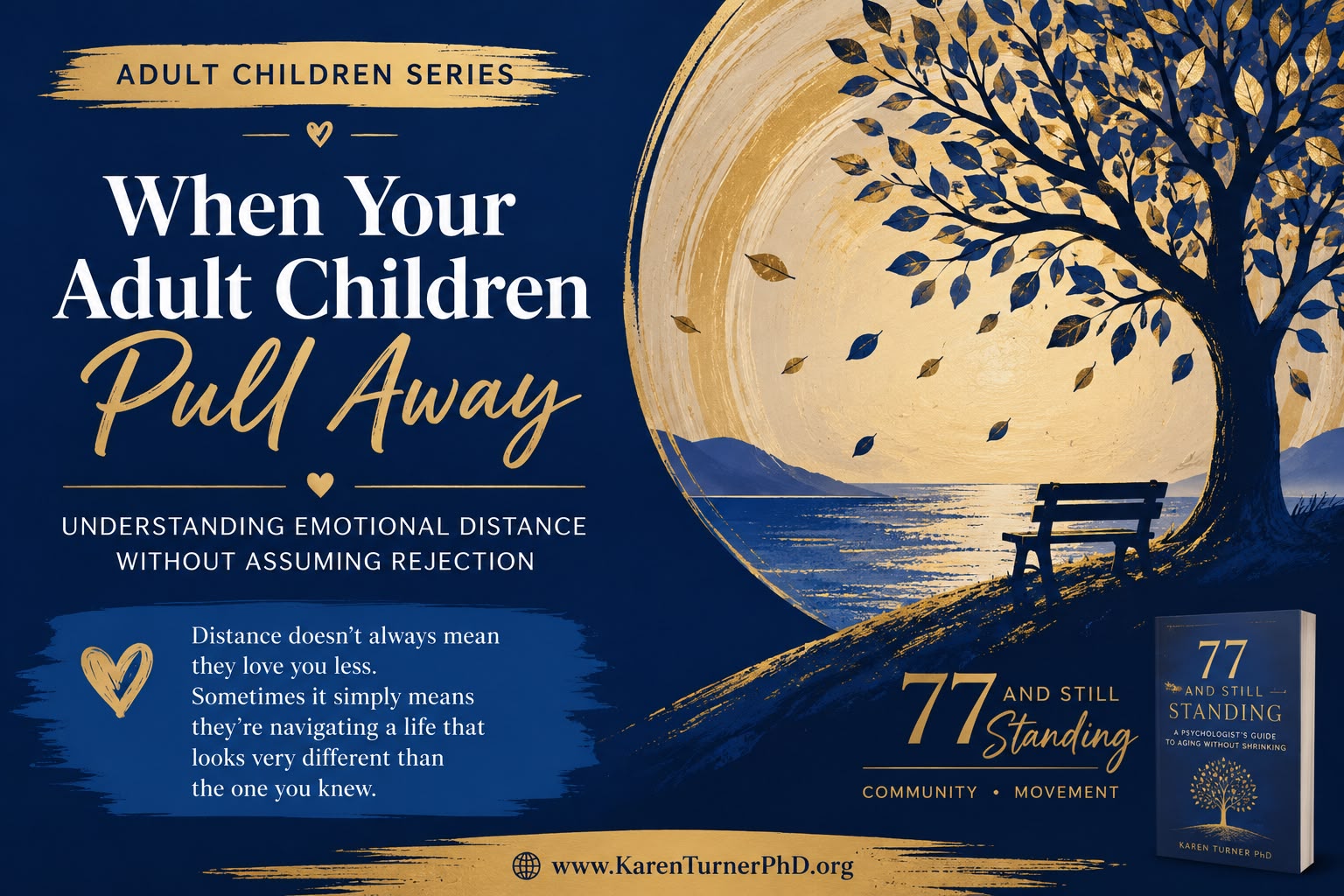
Watching an adult child grow distant, shorter calls, unanswered texts, visits that feel rushed, is one of the quietly painful experiences of aging. This article focuses on the emotional and psychological side of that distance: why it happens, and how to understand it without concluding you’ve been rejected.
Why Do Adult Children Become Emotionally Distant From Their Parents?
Most of the time, it isn’t rejection, it’s overload. Adult children are navigating careers, marriages, raising their own children, financial pressure, caregiving responsibilities, and their own mental health, often all at once. Many are exhausted rather than intentionally withdrawing. Distance usually reflects competing demands, not diminished love, even though that distinction doesn’t make it hurt any less.
What Does the Psychology of Family Distance Actually Tell Us?
Family psychology research suggests relationships naturally shift across adulthood, as adult children balance multiple identities at once: partner, parent, employee, friend, caregiver, and individual. Parents often remain emotionally available in the same steady way they always have, while adult children are constantly dividing their attention among competing roles. Neither side is wrong. They’re simply living different stages of life at the same time.
Four Questions Worth Asking Yourself
Before assuming rejection, it helps to check your own expectations first.
- Am I expecting the relationship to look like it did ten years ago? Adult children rarely return to the level of daily contact that existed before careers and families.
- Am I waiting for them to initiate every conversation? Sometimes both generations are quietly waiting for the other to reach out first. A simple text, “thinking about you today,” can keep connection alive without pressure.
- Have I confused frequency with closeness? Some families speak every day. Others speak once every two weeks and remain deeply connected. Quality often matters more than quantity.
- Am I giving them emotional space without disappearing? Healthy relationships allow both closeness and independence. Being consistently warm, without demanding constant reassurance, often strengthens the relationship over time.
What Adult Children Often Wish Parents Understood
Many adult children carry quiet guilt about not calling enough, and worry that every conversation will open with “you never call anymore.” When guilt becomes the starting point, avoidance often follows close behind. Parents who lead with warmth rather than disappointment tend to create safer openings for reconnection.
What Parents Wish Adult Children Understood
Parents usually aren’t asking for constant attention. They’re asking for reminders that the relationship still matters, a short phone call, a shared photograph, a simple “how are you doing?” Small gestures like these often carry enormous emotional weight, far more than their size would suggest.
How Do You Build a Relationship for This Stage of Life?
Rather than trying to recreate the past, it helps to ask what kind of relationship makes sense now: how can we enjoy one another without unrealistic expectations, and how can we stay curious instead of defensive? Healthy families adapt. They don’t remain frozen in earlier roles.
If You’re the Parent Feeling the Distance
You’re allowed to miss your children. You’re allowed to feel lonely. But before concluding you’ve lost the relationship, remember that many adult children love their parents deeply while struggling to balance an increasingly complicated life. Sometimes the bridge back isn’t built with one big conversation. It’s built with small, consistent moments of kindness that leave both people wanting the next one.
If you’re ready to move from understanding into action, the companion piece, Adult Children Pull Away From Aging Parents (And What You Can Do About It), walks through concrete steps you can take.
Key Takeaway
The relationship between parents and adult children isn’t measured by how often you speak. It’s measured by the trust, respect, and love that continue to exist even as life changes. The strongest families learn that connection doesn’t require constant contact, it requires keeping the door open.
Related Reading
- When Helping Your Adult Children Begins to Hurt You
- Adult Children Pull Away From Aging Parents (And What You Can Do About It) (the practical side of this topic)
- When Expectations Hurt: Letting Go of the Family Story You Thought Would Happen
- When Adult Children Become Caregivers
- What Aging Parents Wish Their Adult Children Knew
- When Your Adult Children Do Not Approve of Your New Relationship
- Estranged From Your Adult Children After Divorce? How to Cope and Rebuild
- 77 and Still Standing