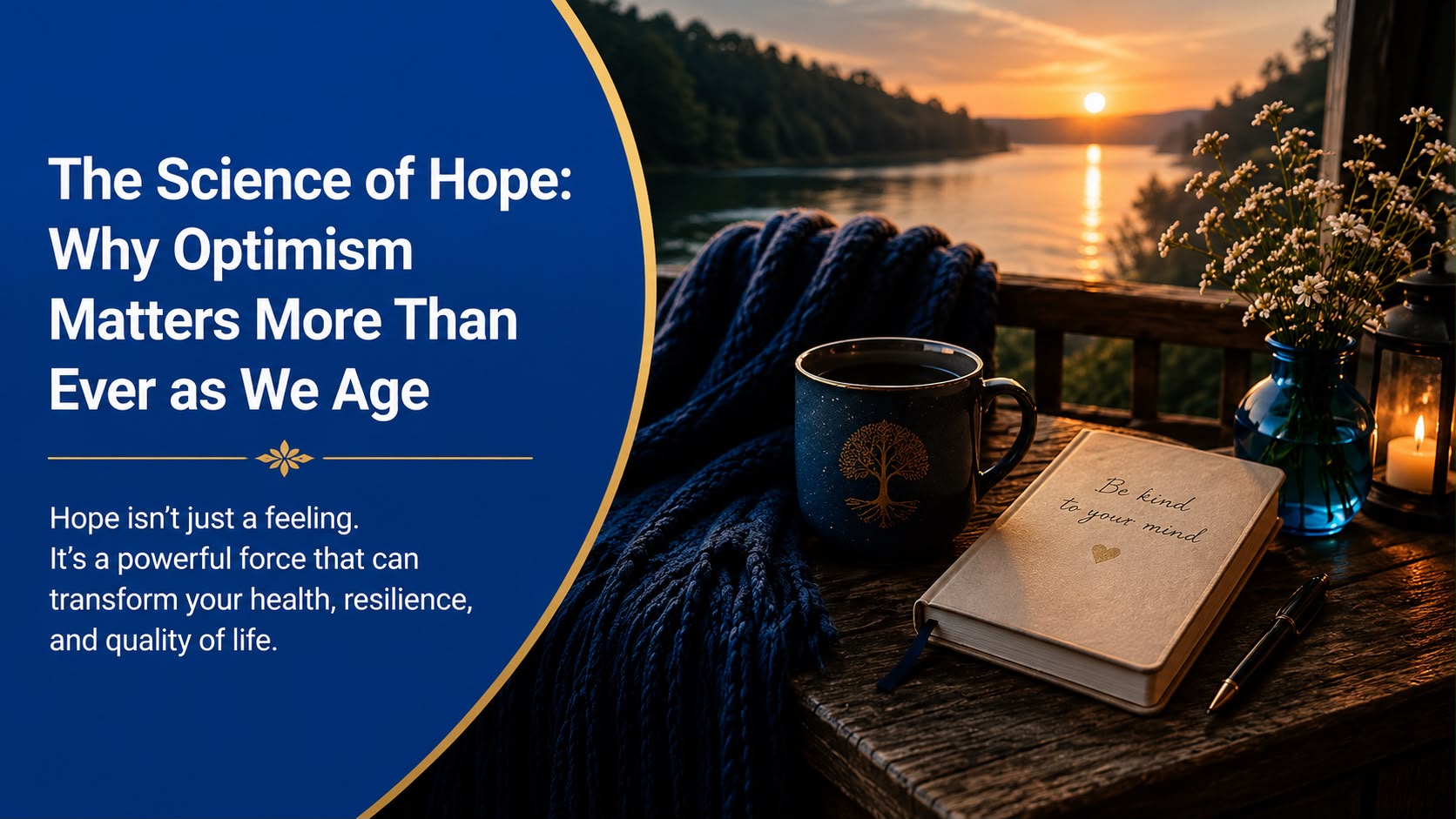
Hope isn’t wishful thinking. It’s a psychological skill that shapes how well you cope with adversity, recover from illness, and continue growing as you age, and the science shows it can be strengthened at any stage of life.
Hope is often dismissed as wishful thinking: something nice, something comforting, something people cling to when life becomes difficult. Science tells a very different story. Hope is not denial. It is not pretending everything is fine, and it certainly isn’t naïveté.
Research over the past several decades has shown that hope is one of the most powerful psychological resources we possess. It influences how we cope with adversity, recover from illness, manage stress, build relationships, and even how long we live. As we grow older, hope becomes even more important, not because life becomes easier, but because it helps us meet life’s inevitable challenges with resilience, perspective, and purpose.
Is Hope the Same Thing as Positive Thinking?
Not quite. Many people confuse hope with optimism. They’re related, but they aren’t the same. Optimism is the belief that good things can happen. Hope goes a step further: it says, “Even if life is difficult, I believe I can find a way forward.” That difference matters. Hope isn’t passive; it’s active, and it encourages action instead of resignation.
What Does Science Tell Us About Hope?
Researchers in psychology and neuroscience have found that hopeful people tend to experience real, measurable benefits. Hope doesn’t magically remove problems. It changes how we respond to them.
- Lower levels of chronic stress
- Faster recovery after illness or surgery
- Better sleep
- Healthier immune systems
- Greater emotional resilience
- Stronger social relationships
- Higher life satisfaction
- Longer average lifespan
How Does Hope Change the Brain?
Our brains are remarkably adaptable throughout life. This ability, known as neuroplasticity, allows us to continue learning, growing, and forming new neural pathways well into older adulthood. Hope supports this process: when we believe our actions matter, we’re more likely to exercise, learn new skills, connect with others, take care of our health, and pursue meaningful goals. Those choices strengthen both body and mind. Hope creates momentum.
Why Does Hope Matter Even More After 60?
Later life often brings changes we never expected: retirement, loss, health concerns, family transitions, new responsibilities, uncertainty. These experiences can quietly convince us that our best years are behind us, but they aren’t. Hope reminds us that while our circumstances may change, our capacity to grow does not. Purpose has no expiration date, and neither does possibility. Many people who struggle with this feeling also carry a habit of overthinking every possible outcome, a pattern explored in Why Smart People Worry More as They Age.
Does Hope Mean Ignoring Reality?
No, the opposite is true. Real hope looks reality squarely in the eye. It recognizes pain, accepts uncertainty, and acknowledges disappointment. Then it asks one powerful question: “Given where I am today, what is still possible?” That’s not denial. That’s resilience.
Five Ways to Build More Hope
Hope can be strengthened deliberately, and these five habits align closely with the broader traits linked to thriving in later life covered in The Psychology of Successful Aging.
- Focus on one small step. Hope grows through action. You don’t have to solve your entire future today. Take one meaningful step, then another. Small victories build confidence.
- Remember your past resilience. Think about everything you’ve already overcome: loss, disappointment, career changes, family struggles, illness. You survived challenges you once thought impossible, and your past is evidence of your strength.
- Stay connected. Hope grows in relationships. Spend time with people who encourage you, volunteer, join a class, or reconnect with old friends. Isolation drains hope; connection restores it.
- Keep learning. Read books, learn technology, take a painting class, or travel somewhere new. Curiosity keeps hope alive because it reminds us there is always more to discover.
- Choose gratitude without ignoring reality. Gratitude doesn’t require pretending life is perfect. It simply reminds us that even difficult seasons contain moments worth appreciating. Hope and gratitude strengthen one another.
Can One Conversation Really Change Everything?
Sometimes hope returns quietly: a phone call, a walk outside, a grandchild’s laugh, a new friendship, a meaningful book, a volunteer opportunity, a sunrise. We often imagine transformation happens through dramatic moments. More often, it begins with small ones.
Is Hope Contagious?
Yes. One hopeful person can change an entire family. A hopeful grandparent teaches resilience without saying a word. A hopeful friend reminds others that difficult seasons eventually pass. A hopeful community creates belonging. Hope spreads, and that’s one reason it matters so much.
Final Thoughts
One of the greatest misconceptions about aging is that life gradually becomes smaller. I don’t believe that. Life changes, priorities change, dreams change, but the opportunity to learn, contribute, love, and grow remains. Hope is not about pretending tomorrow will be easy. It’s about believing tomorrow is still worth showing up for.
At 77 and Still Standing, we believe that aging isn’t about counting the years behind you. It’s about recognizing the possibilities still ahead. Because hope isn’t simply an emotion, it’s one of the most powerful decisions we make every day, and that decision can transform the way we age.
Frequently Asked Questions
What is the difference between hope and optimism?
Optimism is the expectation that good things will happen. Hope combines that belief with the confidence that you can take meaningful action, even during difficult circumstances.
Does hope really affect physical health?
Yes. Research has linked hope with lower stress levels, healthier immune function, improved recovery after illness, better sleep, and greater overall well-being.
Can you become more hopeful as you age?
Absolutely. Hope is not something people either have or don’t have. It can be strengthened through purposeful action, meaningful relationships, gratitude, lifelong learning, and focusing on what remains possible.
Why is hope important for healthy aging?
Hope encourages healthy behaviors, strengthens resilience, supports emotional well-being, and helps people continue finding meaning and purpose throughout later life.