

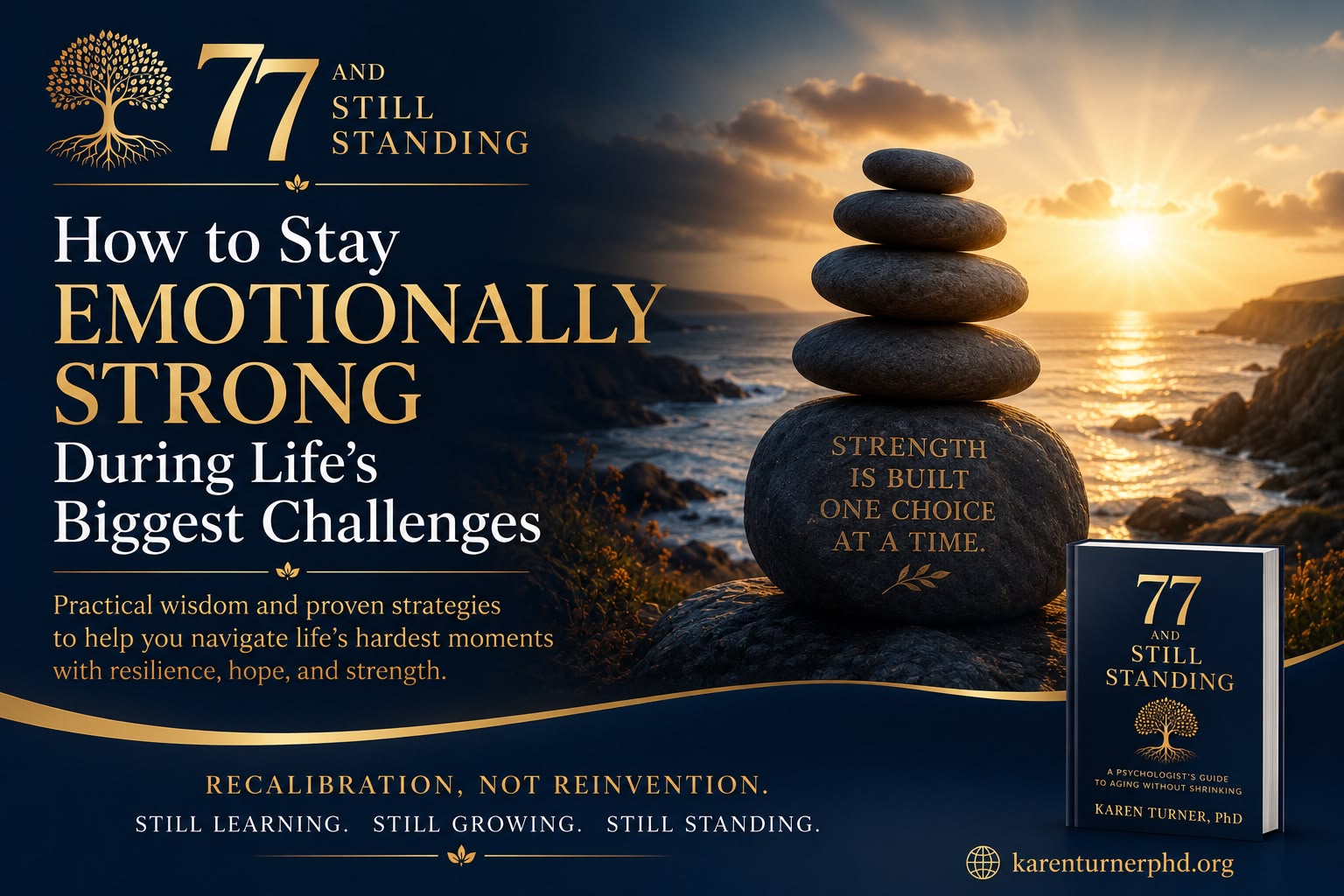
Emotional strength isn’t about avoiding pain. It’s a set of skills, acceptance, honest self-talk, connection, and small daily anchors, that you can build deliberately, especially during life’s hardest seasons.
Life rarely unfolds exactly as we planned. Whether you’re facing the loss of a loved one, a serious illness, family conflict, financial uncertainty, retirement, caregiving, or simply the unexpected twists that come with growing older, emotional strength isn’t about avoiding pain. It’s about learning how to move through it without losing yourself.
As a psychologist, and as someone who has navigated profound personal challenges myself, I have learned that resilience is not something we’re born with. It is something we build, one choice at a time. Here are practical, research-supported ways to remain emotionally strong, even when life feels overwhelming.
10 Ways to Stay Emotionally Strong
1. Accept What You Cannot Control
One of the greatest sources of emotional suffering is fighting reality. Acceptance doesn’t mean giving up. It means recognizing what cannot be changed so you can focus your energy on what can. Ask yourself: “What is within my control today?” Even a small answer can restore a sense of stability.
2. Feel Your Emotions Without Letting Them Define You
Many people believe being emotionally strong means never crying or feeling afraid. The opposite is true. Strength comes from allowing yourself to experience emotions without becoming trapped by them. Sadness, anger, disappointment, and fear are visitors, not permanent residents.
3. Focus on the Next Right Step
When life feels overwhelming, stop trying to solve everything at once. Instead, ask: what’s the next right step? Sometimes that’s making a phone call. Sometimes it’s taking a walk. Sometimes it’s simply getting dressed. Progress is built one step at a time.
4. Protect Your Inner Dialogue
Your thoughts become the soundtrack of your life. Notice when your inner voice becomes overly critical or hopeless. Instead of saying “I can’t handle this,” try, “This is incredibly difficult, but I’ve survived difficult things before.” The goal isn’t false positivity. It’s honest encouragement.
5. Stay Connected
Pain often convinces us to withdraw, but connection heals. Talk with trusted friends. Spend time with family. Join a class. Volunteer. Even brief moments of genuine connection can reduce stress and remind us that we’re not carrying life’s burdens alone.
6. Create Small Daily Anchors
During periods of uncertainty, routines become emotional lifelines. Simple habits like morning coffee on the porch, reading before bed, exercising, journaling, or calling a friend create stability when everything else feels uncertain. Small rituals calm the nervous system.
7. Look for Meaning, Not Perfection
One of the most important lessons I’ve learned is this: we cannot always choose what happens, but we can choose what we learn from it. Some of life’s greatest wisdom grows from its hardest seasons. Not immediately, but eventually.
8. Take Care of Your Body
Emotional resilience begins with physical resilience. Sleep, nutritious food, movement, fresh air, and hydration aren’t luxuries. They’re part of emotional recovery.
9. Allow Hope to Be Quiet
Hope doesn’t always arrive with confidence. Sometimes hope is simply deciding to get up tomorrow and try again, or believing that this difficult chapter is not the entire story. Hope doesn’t erase pain. It helps us carry it.
10. Remember Who You Are
Challenges have a way of making us forget our own strength. Take a moment to remember:
- Times you’ve overcome adversity.
- People you’ve helped.
- Problems you’ve solved.
- Courage you’ve already demonstrated.
Your history is evidence that you are more resilient than you sometimes believe.
Emotional Strength Is Built, Not Found
Life will challenge every one of us. The question isn’t whether difficult seasons will come. The question is how we’ll respond when they do. Emotional strength isn’t about never falling. It’s about continuing to rise, again and again, with wisdom, compassion, and hope.
As I often say in 77 and Still Standing: you don’t have to be fearless to keep moving forward. You simply have to take the next step. If you’re navigating a specific hardship right now, Recalibration, Not Reinvention: Still Standing After the Things That Nearly Broke You looks more closely at rebuilding after the moments that shake us the most.
Frequently Asked Questions
What does it mean to be emotionally strong?
Being emotionally strong means adapting to adversity, managing difficult emotions in healthy ways, maintaining hope, and continuing to move forward despite life’s challenges.
Can emotional resilience be learned?
Yes. Research shows resilience can be strengthened through healthy habits, supportive relationships, realistic thinking, self-compassion, and finding meaning in difficult experiences.
How can I stay positive during difficult times?
You don’t need to be positive all the time. Focus instead on staying realistic, connected, and hopeful. Small daily actions, gratitude, and supportive relationships often strengthen emotional well-being more than forced optimism.
Related Reading
- When Helping Your Adult Children Begins to Hurt You
- Recalibration, Not Reinvention: Still Standing After the Things That Nearly Broke You
- The Loneliness of Being the Strong One
- The Science of Hope: Why Optimism Matters More Than Ever as We Age
- The Psychology of Regret: Why Your Best Years May Still Be Ahead
- Why Do I Apologize for Everything? People-Pleasing, Boundaries, and the Freedom That Can Come With Age
- How to Let Go of Regret Later in Life, Without Pretending the Past Did Not Matter
- 77 and Still Standing