
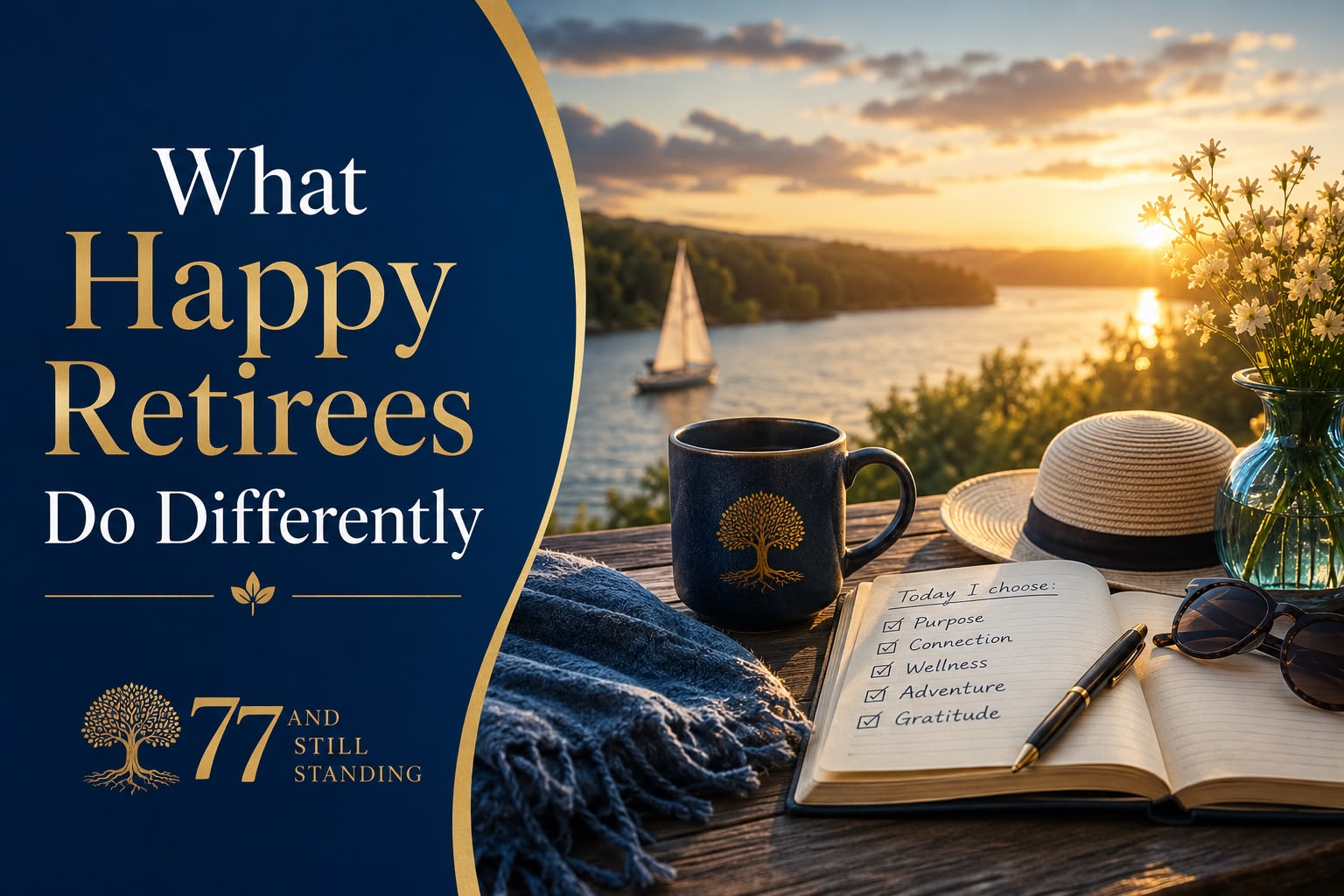
The happiest retirees aren’t the wealthiest or healthiest ones. They’re the people who deliberately replace the structure, purpose, and connection that work used to provide, and those habits can be learned by anyone at any stage of retirement.
Retirement is often imagined as one long vacation: more free time, less stress, complete freedom. Yet for many people, retirement turns out to be emotionally more complicated than they expected. Some retirees flourish. Others feel restless, disconnected, or unsure of what comes next.
The difference isn’t usually money. It isn’t luck. And surprisingly, it isn’t even health. Research consistently shows that the happiest retirees share certain habits and ways of thinking that anyone can begin developing. The good news is that these habits can be learned.
Why Doesn’t Happiness Come From Simply Stopping Work?
Many people spend decades planning financially for retirement, but far fewer prepare psychologically. Work provides far more than a paycheck: it provides purpose, structure, identity, social interaction, goals, and a sense of contribution. When work disappears, those needs don’t disappear with it. Happy retirees replace them intentionally.
What Habits Do Happy Retirees Share?
After years of studying how people navigate this transition, a clear set of daily habits and mindset shifts keeps showing up among the retirees who thrive.
They Replace Their Career with Purpose
One of the biggest misconceptions about retirement is that purpose retires with your job. It doesn’t; purpose simply changes. Some people volunteer, mentor, write, garden, travel, learn new skills, care for grandchildren, start small businesses, or create art. Purpose isn’t about staying busy. It’s about continuing to matter, a search covered in more depth in How to Find Meaning After Retirement.
They Continue Learning
Research on healthy aging shows that lifelong learning helps keep both the brain and the spirit engaged. Happy retirees remain curious. They read, take classes, learn technology, play musical instruments, study history, and learn languages. Curiosity keeps life interesting.
They Invest in Relationships
One of the strongest predictors of happiness in retirement isn’t wealth. It’s connection. Happy retirees intentionally nurture friendships by calling people, joining clubs, volunteering, meeting neighbors, having coffee with friends, and spending meaningful time with family. Relationships become one of their greatest sources of joy.
They Stay Physically Active
Exercise isn’t just about muscles. Movement improves mood, memory, energy, sleep, confidence, and brain health. The happiest retirees don’t necessarily run marathons. They simply keep moving through walking, swimming, Pilates, yoga, dancing, or gardening. Consistency matters far more than intensity.
They Stop Living by the Clock, and Build New Routines Instead
Many retirees initially struggle without a schedule. Ironically, happy retirees create new routines: morning walks, coffee on the porch, reading, volunteer work, lunch with friends, creative projects. A gentle rhythm creates emotional stability. Freedom doesn’t mean chaos.
They Let Go of Perfection
One advantage of aging is perspective. Happy retirees become less interested in impressing others and more interested in authenticity. They stop comparing themselves to others and stop trying to meet everyone else’s expectations. Instead, they ask, “What brings me joy?” That question changes everything.
They Keep Growing
One of the greatest myths about aging is that personal growth eventually ends. It doesn’t. Happy retirees continue evolving: they remain open, curious, flexible, and optimistic. Every season offers new opportunities to learn something about themselves.
They Protect Their Mental Health
Happy retirees understand that emotional well-being deserves as much attention as physical health. They manage stress, stay socially connected, ask for help when needed, practice gratitude, limit unnecessary negativity, and spend time in nature. Protecting mental health becomes part of protecting overall health.
They Focus on Contribution Instead of Productivity
For much of adulthood we’re rewarded for productivity. Retirement offers something richer: contribution. Helping others, sharing wisdom, encouraging younger generations, and giving back. Contribution creates meaning, and meaning creates happiness.
Is Retirement the End of the Story?
Some people quietly fear retirement because it feels like life is winding down. Happy retirees see it differently. They see retirement as permission: permission to explore, to learn, to slow down, to deepen relationships, and to become more fully themselves. If you’re wondering what psychologically separates people who thrive from those who feel lost in this transition, that mindset shift is explored further in Why Some People Thrive After Retirement While Others Feel Lost.
Final Thoughts
After decades of working as a psychologist, I’ve come to believe that happiness isn’t something we stumble upon. It’s something we build, one conversation, one friendship, one purpose-filled day, and one act of kindness and gratitude at a time.
Retirement doesn’t have to be the closing chapter. For many people, it’s the chapter where they finally have the freedom to write the story they’ve always wanted to live. At 77 and Still Standing, we believe aging isn’t about becoming less. It’s about becoming more intentional, more authentic, more connected, and perhaps happier than you’ve ever been.
Frequently Asked Questions
What makes retirees happiest?
Research shows that the happiest retirees maintain meaningful relationships, stay physically active, continue learning, cultivate a sense of purpose, and contribute to others in ways that feel personally meaningful.
How can I enjoy retirement more?
Build structure into your days, stay socially connected, pursue hobbies, volunteer, continue learning new skills, and focus on creating purpose rather than simply filling time.
Why do some people struggle after retirement?
Many people lose the identity, routine, social interaction, and sense of purpose their careers provided. Replacing those psychological needs is just as important as financial planning.
Is it normal to feel lost after retiring?
Yes. Retirement is one of life’s biggest transitions. Feeling uncertain at first is common, but with intentional habits and meaningful engagement, many people discover that retirement becomes one of the most fulfilling stages of life.