When we’re young, nearly every conversation points toward tomorrow. What do you want to be? Where do you want to live? Who will you marry? Our lives become organized around the future.
Then something subtle happens. We retire. Children grow up and leave. Parents die. Milestones start becoming memories instead of goals. Without anyone telling us to, we gradually stop asking one of life’s most important questions: what am I looking forward to?
Most people don’t notice the shift because it happens slowly. Days become routines. Weeks become familiar. The calendar fills with appointments rather than aspirations. The future begins to feel smaller, not because it actually is, but because we’ve stopped imagining it.
Why Do We Stop Dreaming About the Future?
Psychologists have long understood that hope is more than optimism. Hope requires three specific beliefs: that tomorrow can be meaningful, that your actions still matter, and that you still have choices.
When those three beliefs weaken, people don’t necessarily become depressed. They become passive. They begin maintaining life rather than designing it, and that’s a very different thing. Maintaining asks, “How do I get through today?” Designing asks, “How do I want to spend the years I still have?”
Retirement Isn’t the End of Purpose
Many people believe retirement creates freedom. It certainly creates time. But time without intention often becomes drift.
For decades your work structured your day. Your children gave you responsibilities. Your community expected something from you. Then one day those external structures disappear, and the question becomes: who am I when no one is telling me who I need to be? That question can feel unsettling. It can also become one of life’s greatest opportunities.
We Often Mistake Familiarity for Fulfillment
One of the quietest traps of aging is confusing comfort with contentment. Comfort says, “I know what tomorrow looks like.” Contentment says, “I’m excited about tomorrow.” Those are not the same thing. Routine creates safety. Purpose creates vitality.
Your Future Doesn’t Need to Be Bigger, Just Yours
One misconception keeps many people from dreaming again: they think dreams must be dramatic. Move across the country. Write a bestseller. Start a business. Sometimes they are. More often they are beautifully ordinary.
- Learning watercolor
- Becoming the family historian
- Mentoring one young person
- Joining a hiking group
- Hosting Sunday dinners
- Learning a new language
- Planting a butterfly garden
- Volunteering once a week
Small dreams still create a future.
Ask Better Questions
Instead of asking “What have I lost?” try asking, “What have I finally become free to do?” Instead of “What opportunities are behind me?” ask, “What opportunities only exist because I’m this age?”
Wisdom, perspective, patience, emotional intelligence, and freedom from proving yourself: these are extraordinary advantages most people don’t have in their twenties.
Looking Forward Is a Choice
You cannot choose your age, and you cannot choose how quickly time passes. But you can choose whether tomorrow is something you anticipate or simply endure.
Every meaningful life contains another chapter until it doesn’t. Your story is still being written. Perhaps the most important question is no longer “What did I accomplish?” Perhaps it’s this: “What am I still becoming?” That answer can change everything.
Reflection Questions
- What are you genuinely looking forward to over the next year?
- If fear weren’t involved, what would you begin?
- What have you postponed because you believed it was “too late”?
- What small dream deserves your attention now?
- What would make next year one you’ll remember?
Practical Exercise
Complete this sentence five different ways: “One year from today, I hope…” Don’t judge your answers. Just notice them. Dreams often return quietly before they become visible.
Final Thought
Growing older doesn’t require us to stop imagining tomorrow. In many ways, it invites us to imagine it more honestly than ever before, not because time is unlimited, but because it isn’t.
The future belongs to those who continue looking toward it.
Related Reading
- What Makes Some People Grow Wiser While Others Grow Bitter?
- Your Identity Didn’t Retire When Your Career Did
- More or Enough? The Life-Changing Question That Comes With Age
- Why We Need Recalibration, Not Reinvention, After 60
- What Happy Retirees Do Differently
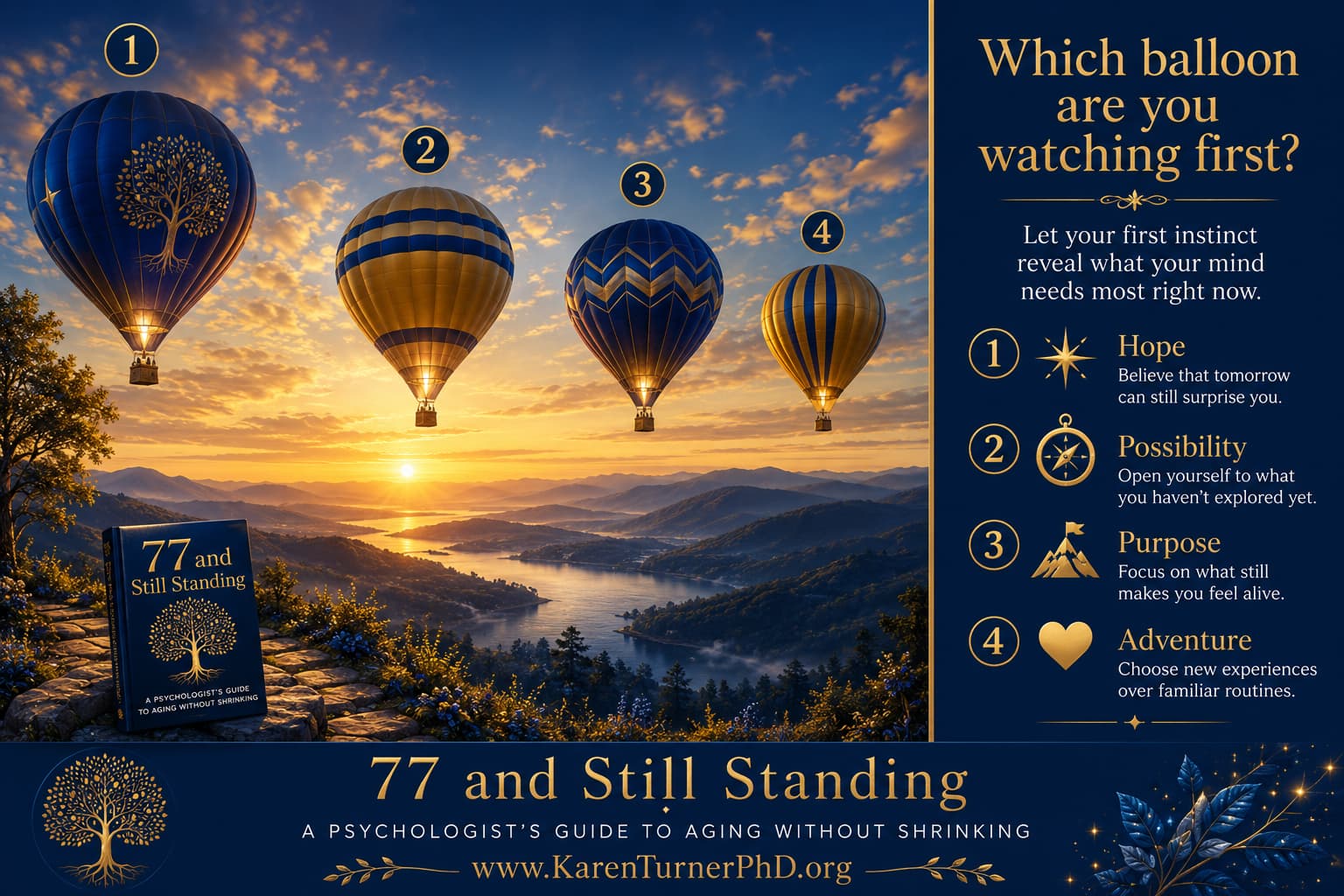
- 77 and Still Standing by Dr. Karen Turner