

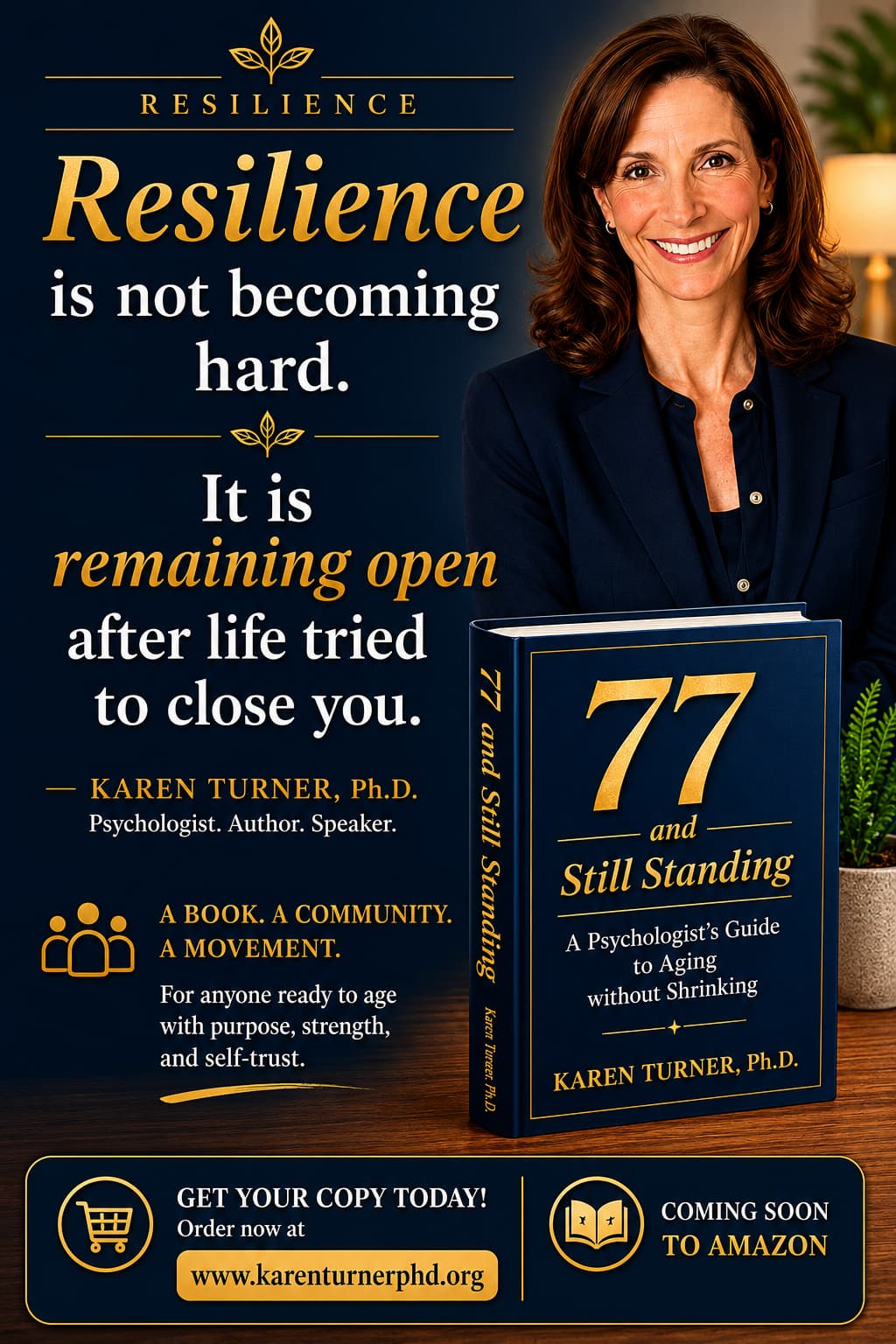
There is a moment when life stops being ordinary: a phone call, a diagnosis, a betrayal, a financial shock, a marriage ending after decades, a professional humiliation you never saw coming. Real resilience after a crisis is not about bouncing back untouched. It is about refusing to stay emotionally closed after something has broken you. This is what recalibration looks like after the moments that nearly ended you, not reinvention, but a steadier, more honest way forward.
What Does It Feel Like When Life Suddenly Breaks You?
One minute you are moving through your life normally. The next, something has hit you so hard emotionally that you can barely breathe. That is the moment people rarely describe honestly when they talk about resilience, because resilience sounds beautiful afterward. While you are inside it, it feels more like shock: you cannot concentrate, you reread texts three times, you wake at four in the morning with your stomach already tight, and you replay conversations endlessly trying to figure out where everything went wrong.
And perhaps the hardest part is that life keeps moving anyway. People still expect responses. Bills still arrive. Laundry still waits. Other people continue talking about ordinary things while, privately, you are trying to steady yourself emotionally enough just to get through the day.
Why Does This Kind of Heartbreak Change People Permanently?
Not because it destroys them, but because it removes innocence. At some point in life, most of us discover that love does not always protect you. Loyalty does not always protect you. Being a good person does not guarantee a good outcome. You can do everything “right” and still find yourself blindsided by grief, disappointment, betrayal, illness, rejection, or loss. That realization is brutal, especially for people who spent decades trying to hold families together, stay strong, stay kind, and stay responsible.
Where Does Real Resilience Actually Begin?
Not in inspiration or motivation. In devastation. Real resilience begins the morning after your heart has been broken and you still somehow get out of bed. It begins when life humiliates you and you resist the urge to emotionally disappear. It begins when bitterness would be understandable, but you fight not to let it fully take you over.
I know this personally, not theoretically, not clinically. There are seasons of life that humble you so deeply you realize strength is not what you thought it was. Strength is not controlling outcomes. Strength is surviving outcomes you never wanted. There is a difference.
As a psychologist, I spent years understanding resilience intellectually. Living through painful personal seasons teaches something entirely different: how quickly life can change, how vulnerable every human being truly is, how easily certainty can evaporate. But it also teaches that human beings are far more emotionally durable than they realize, not because they do not break, but because they keep rebuilding. Sometimes quietly, sometimes angrily, sometimes exhausted. But they rebuild.
Why “Recalibration” Fits Better Than “Reinvention” After a Crisis
I have come to believe resilience is not about becoming harder after life hurts you. It is about refusing to become emotionally closed, and that is much harder. Many people survive disappointment physically while shutting down emotionally: they stop trusting, stop hoping, stop risking closeness, stop believing new joy is possible, and they call the resulting cynicism wisdom. But wisdom and hopelessness are not the same thing. A resilient person still allows life to reach them, even after disappointment, betrayal, or grief. That does not mean naive optimism. It means remaining emotionally alive.
That is why I am somewhat distrustful of later-life reinvention and prefer recalibration instead. Human beings are not machines. We do not endlessly “optimize” ourselves after heartbreak. Sometimes survival itself is the victory, and sometimes resilience means carrying disappointment with dignity instead of allowing it to poison everything good that still remains. If your recalibration is less about a single crisis and more about the general shift life asks of you after 60, this companion piece looks at that broader stage.
What Does Resilience Actually Look Like Day to Day?
People imagine resilience as dramatic triumph. Most of the time it is much quieter than that. Sometimes resilience looks very small from the outside. It may simply mean:
- Answering the phone
- Taking a shower
- Going to lunch with a friend
- Starting a new project
- Laughing unexpectedly
- Allowing yourself to care about something again
It is the decision not to give up on life while you are still healing from it. That is one of the emotional-strength practices explored further in this related piece.
What Can You Take From This?
Perhaps aging clarifies this more than anything else. As you grow older, you begin realizing life is not about creating a perfect story. No one gets that. Every family contains pain. Every long life contains grief. Every human being eventually encounters moments that bring them to their knees emotionally. But some people rise from those moments softer, wiser, more compassionate, more honest. Not untouched. Transformed. That is resilience: not the absence of pain, but the refusal to let pain have the final word.