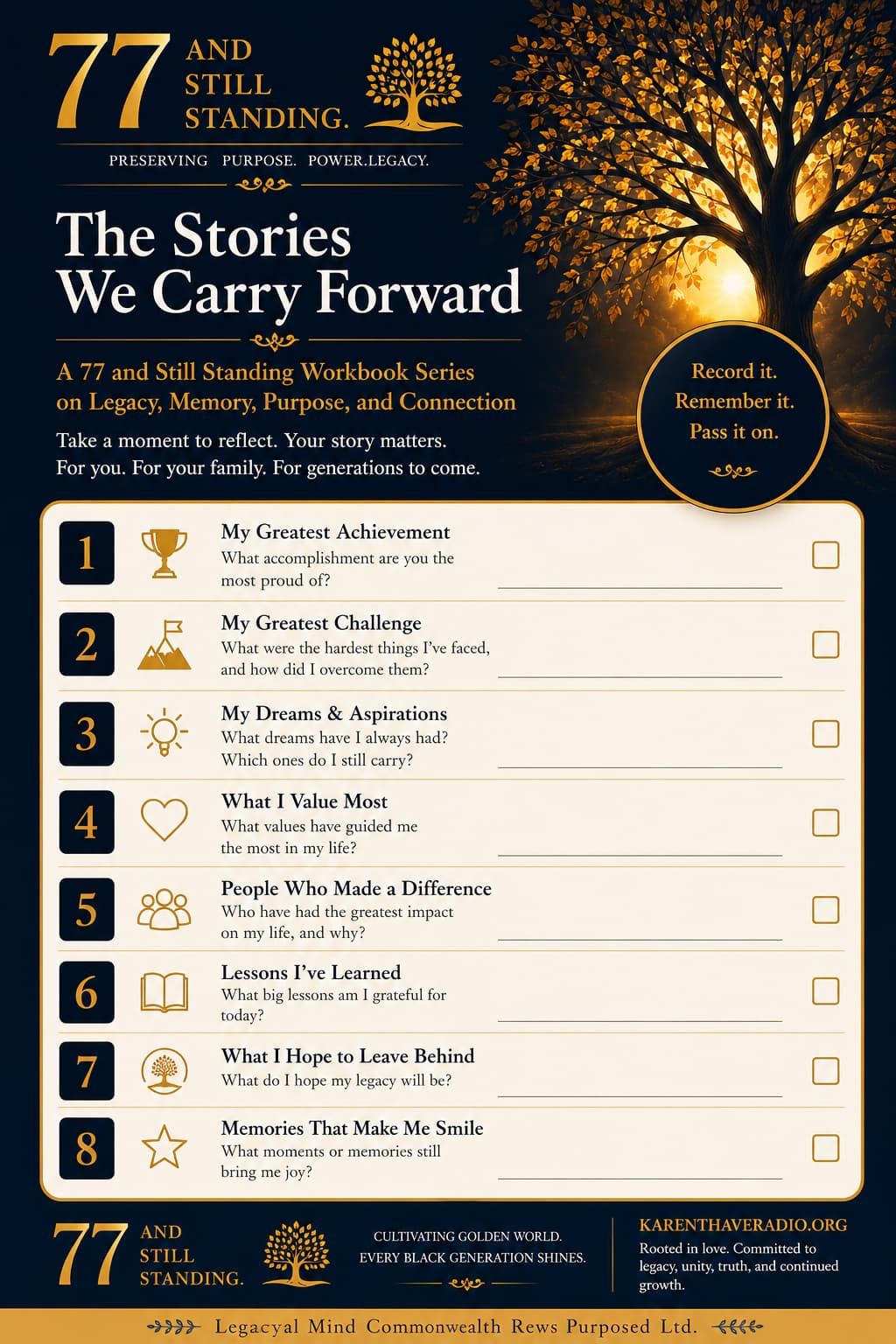
Do your children or grandchildren know the moments that truly shaped your life? Your greatest accomplishments, your hardest seasons, the dreams you once carried, the risks you took, the heartbreaks you survived, the friendships that changed you, the lessons you learned too late? And just as important: do you still remember them clearly?
What Is the 77 and Still Standing Workbook Series?
The 77 and Still Standing Workbook Series is a set of articles and workbook-inspired exercises designed to help baby boomers, seniors, retirees, caregivers, and adults in the second half of life begin recording the stories, reflections, memories, and life lessons that shaped them. It is not a formal autobiography or a perfect historical record. It is something more human than that: a way of saying, “This is who I was. This is what I learned. This is what mattered to me. This is what I hope you carry forward.”
Why Does Recording Your Story Matter So Much Later in Life?
At 77 and Still Standing, we believe recording your story is not simply an act of preserving memories for future generations. It is also an act of reconnecting with yourself. Many adults spend decades moving quickly through life: working, caregiving, managing responsibilities, surviving difficulties, helping others, without fully stopping to reflect on the life they themselves have lived. Your story matters not because it was perfect, but because it was real. Within every real life are experiences, struggles, accomplishments, wisdom, humor, resilience, creativity, and emotional truths that deserve to be remembered.
What Does Research Say About Storytelling and Healthy Aging?
Research on healthy aging consistently shows that emotional engagement, reflection, purpose, cognitive activity, storytelling, social connection, and meaningful participation are strongly associated with emotional wellbeing and resilience later in life. In other words, older adults often thrive emotionally and psychologically when they stay connected to meaning, purpose, memory, creativity, and relationships. That connection can come through conversation, journaling, storytelling, or legacy recording: through remembering parts of ourselves that may have gotten buried beneath years of responsibility and routine.
What Actually Counts as “Legacy”?
Many people assume legacy is only about wealth or achievement. But emotional legacy is often far more powerful, and it tends to be what people remember longest:
- The way you comforted people during hard times
- The traditions you created
- The courage you showed during difficult seasons
- The values you lived by
- The humor that carried your family through hard times
- The kindness you offered, often without being asked
- The strength you did not even realize others were watching
These things remain, and for many families, they become treasures.
The Takeaway
You do not need a perfect memory or a polished writing style to begin. You only need to start: one memory, one lesson, one story at a time. That single act of recording who you were and what mattered to you may become one of the most meaningful gifts you leave behind.